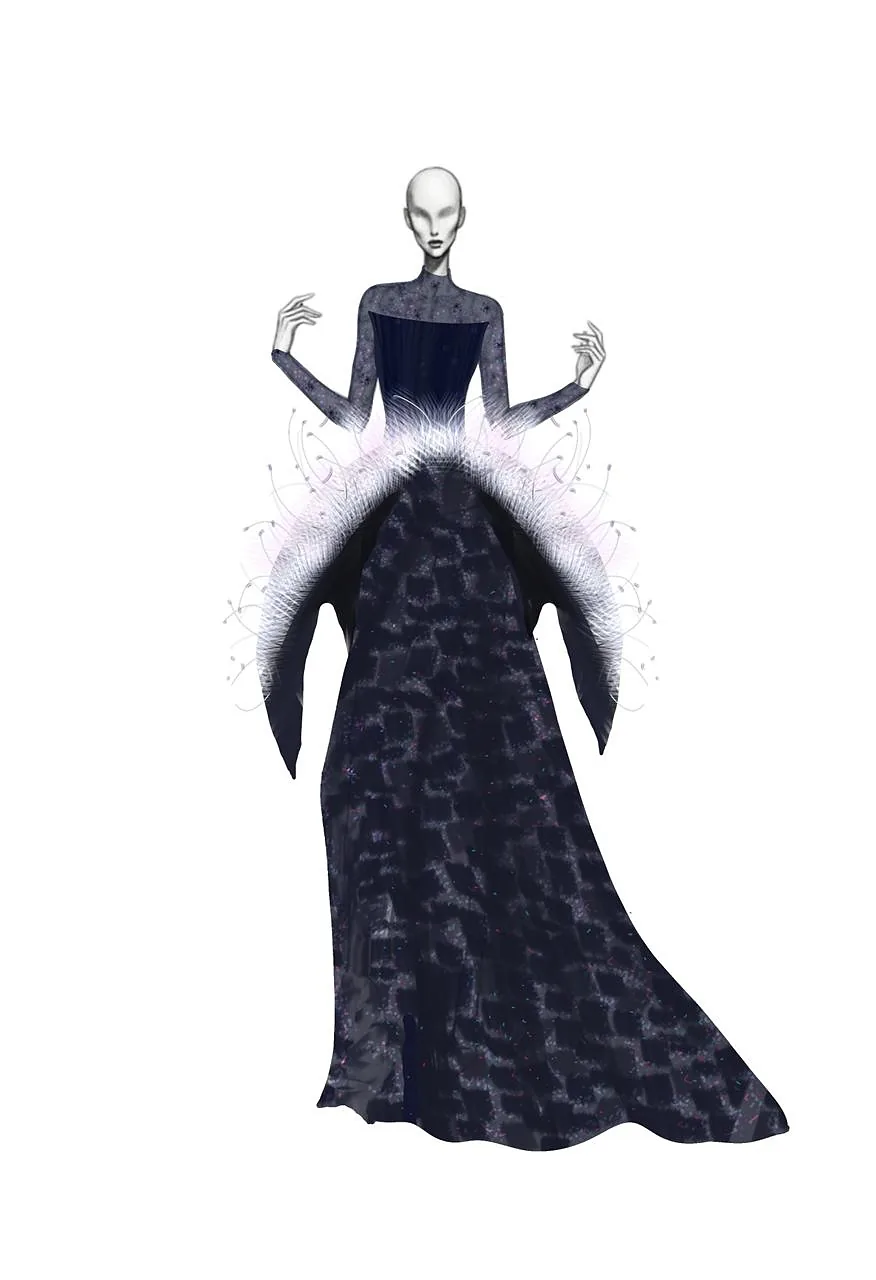
Look 01 · Conditioned / Problem garment
The Conditioned
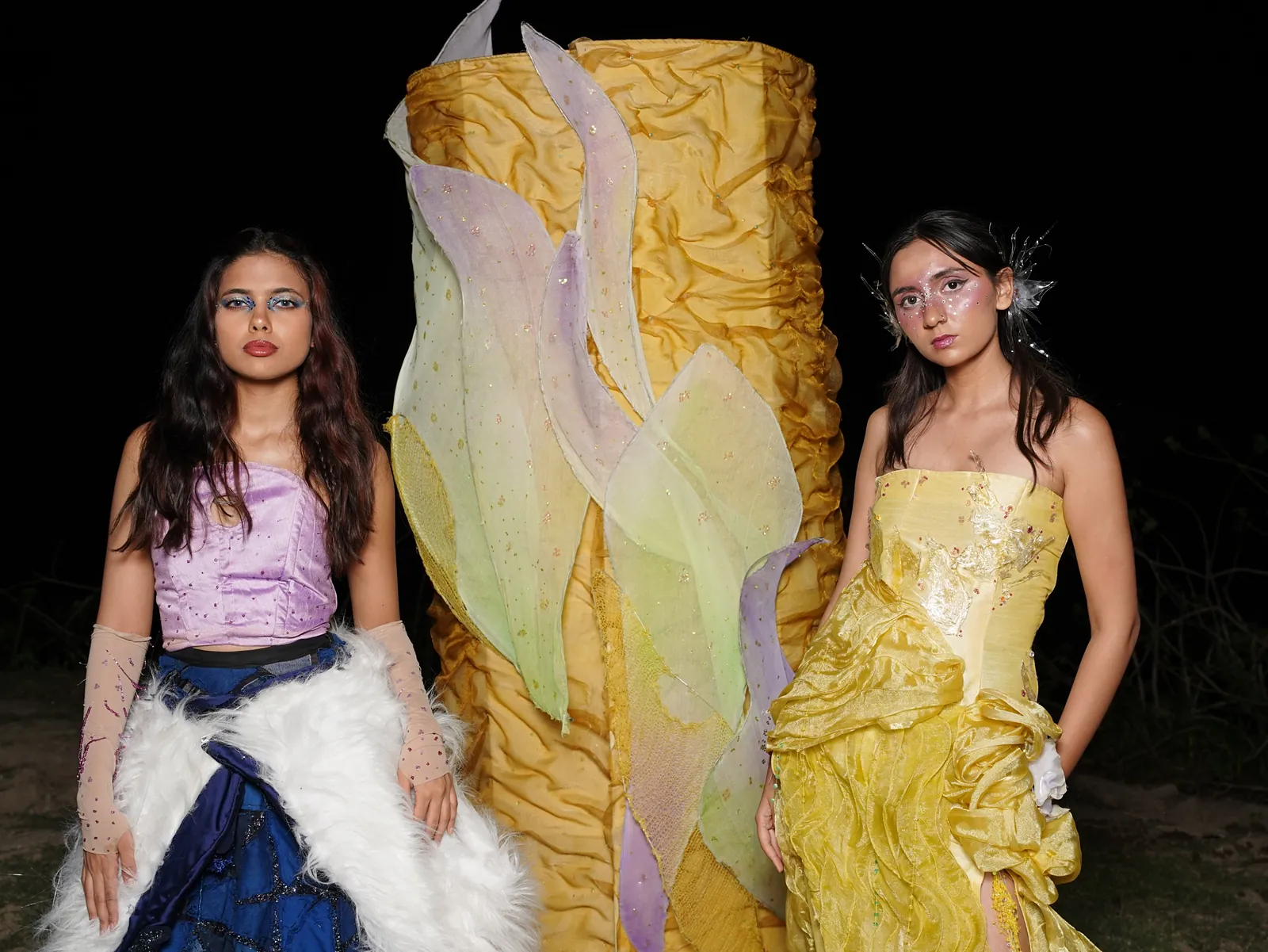
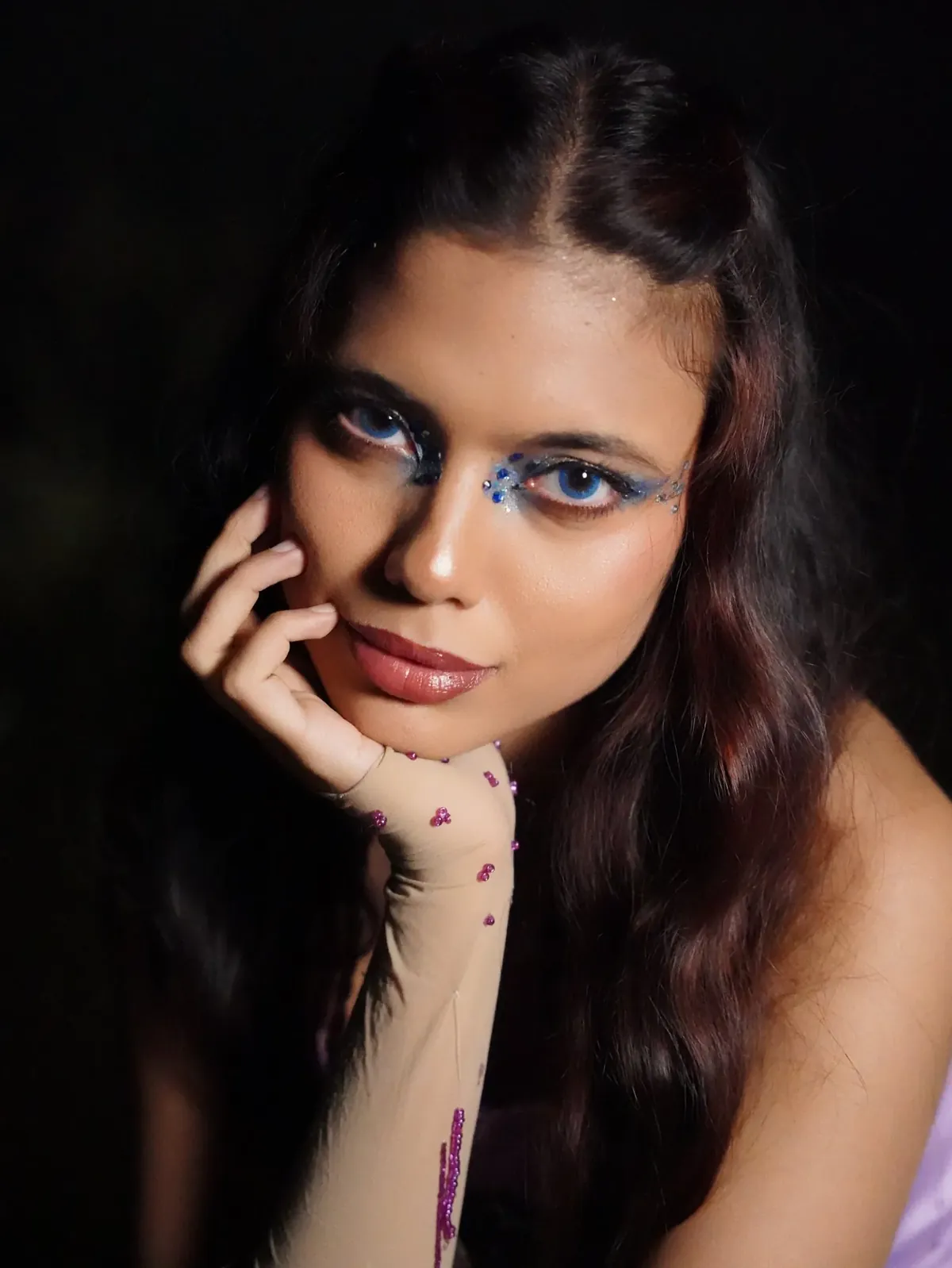
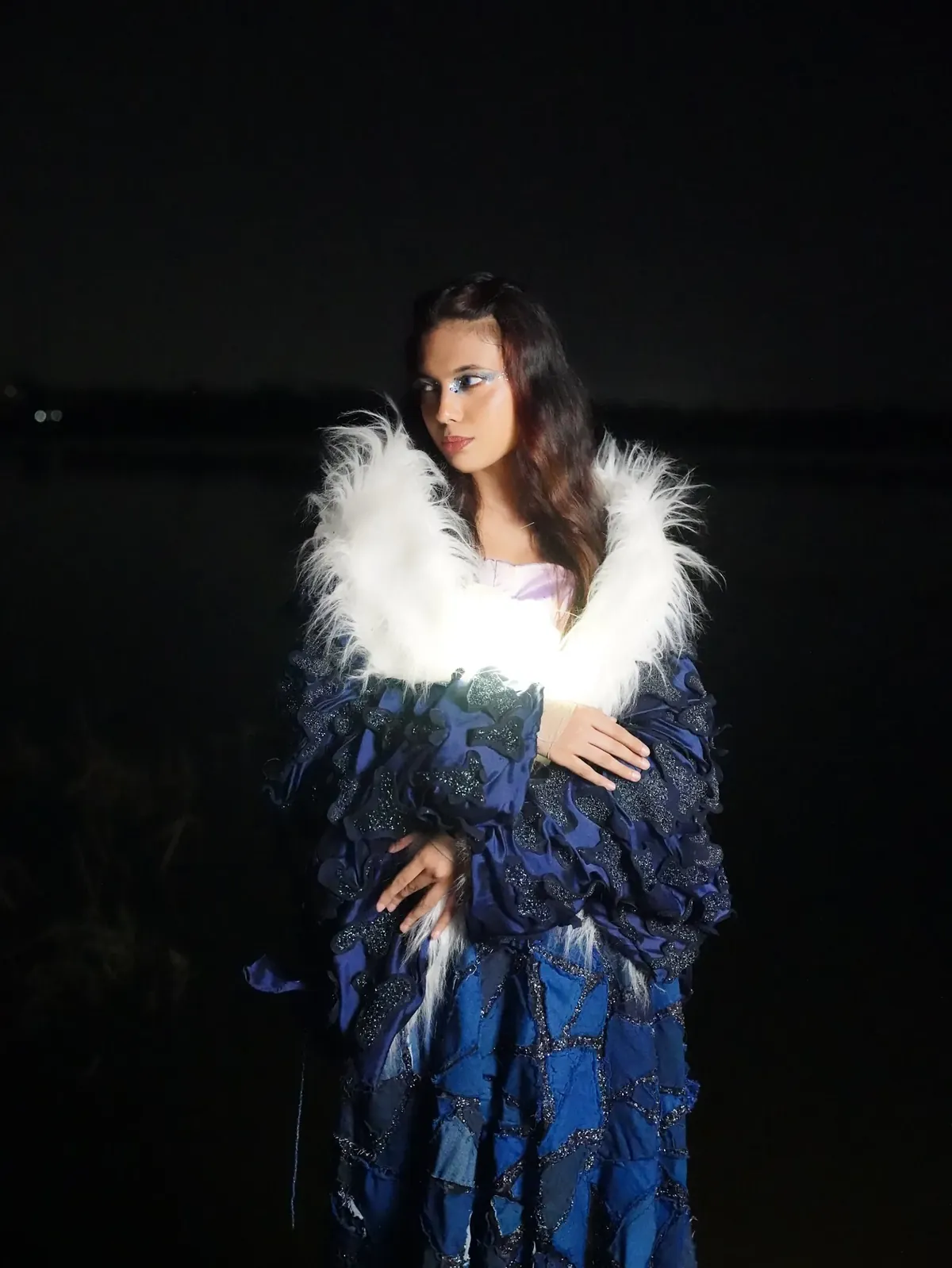
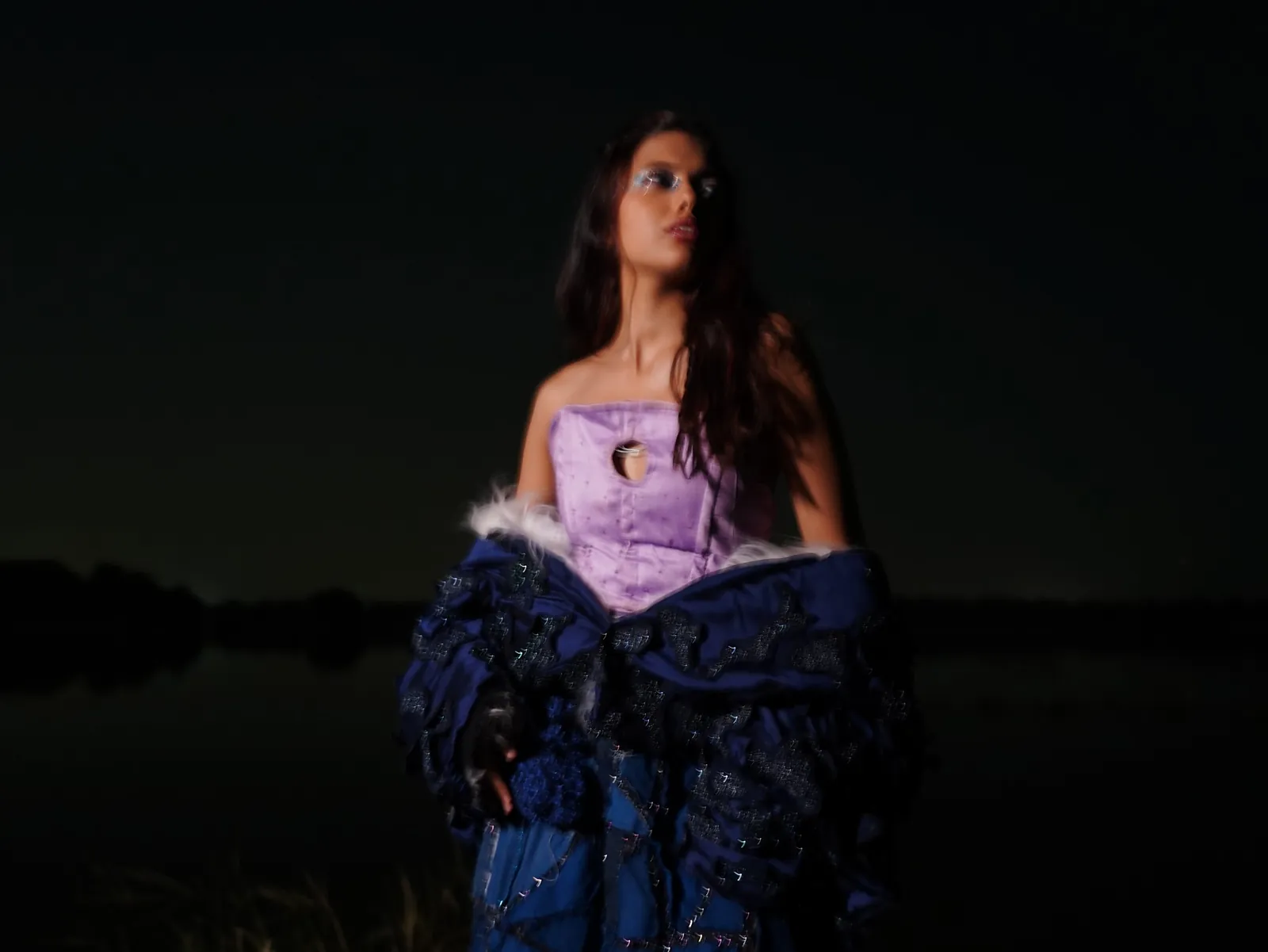
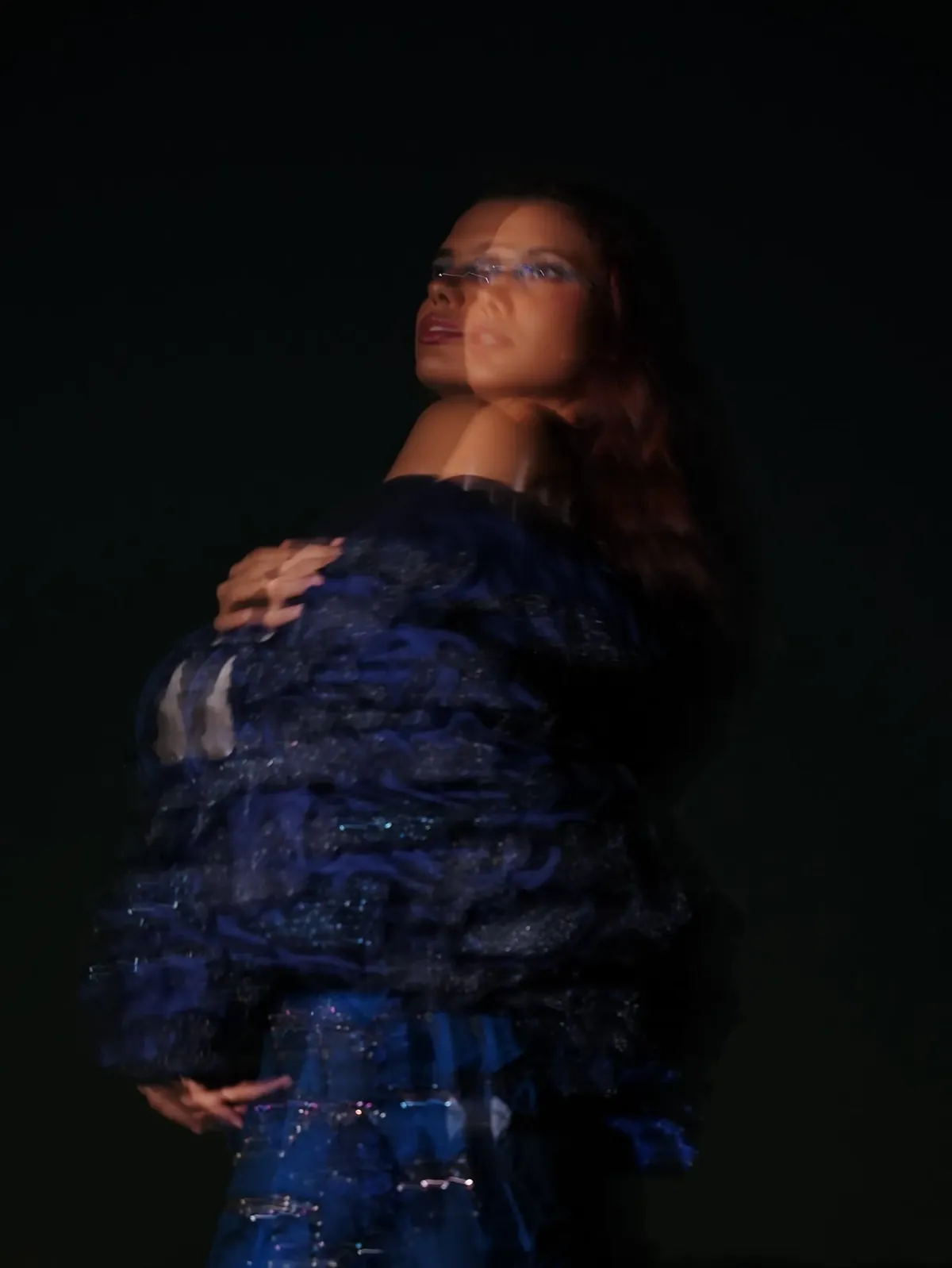
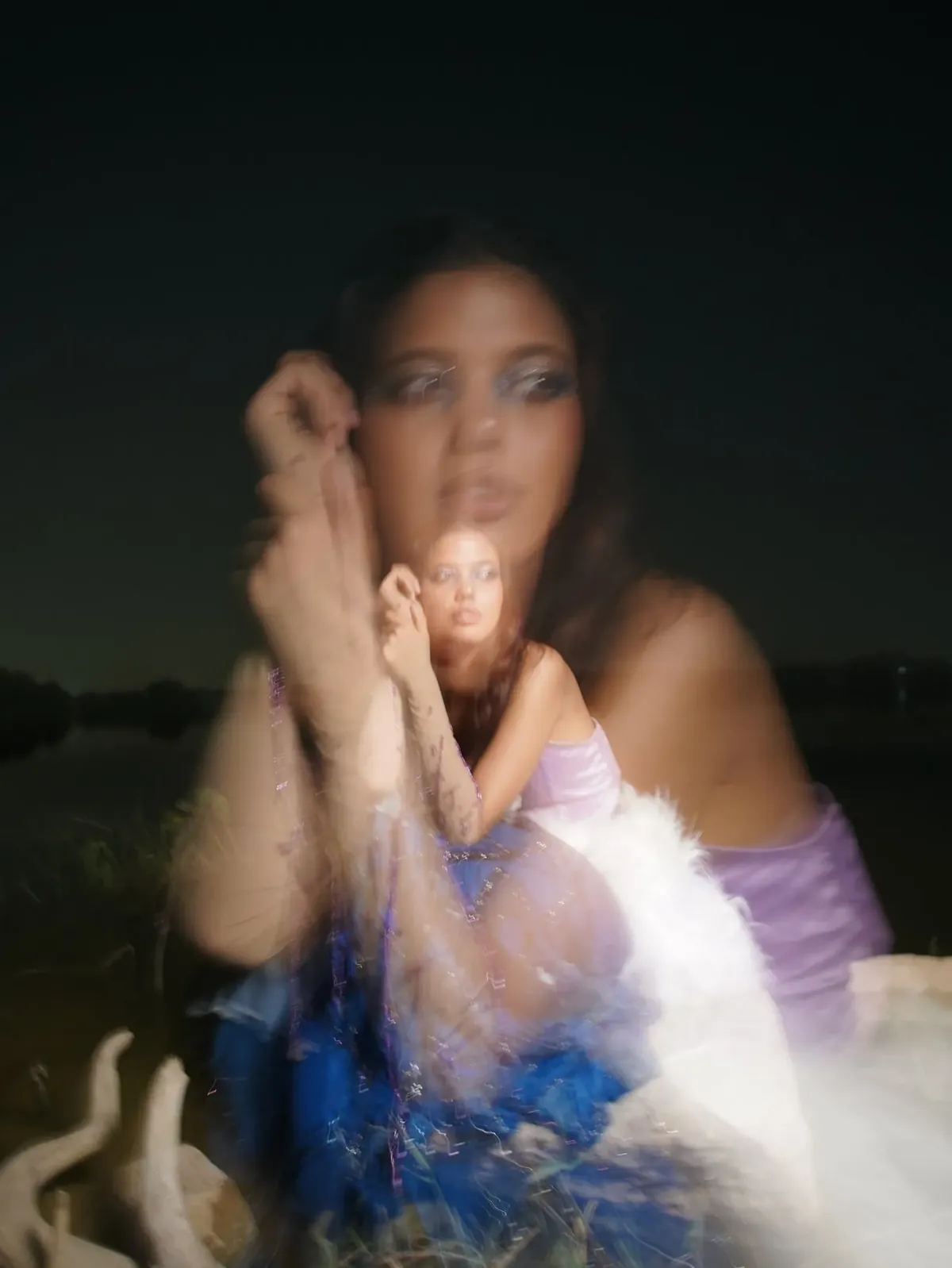
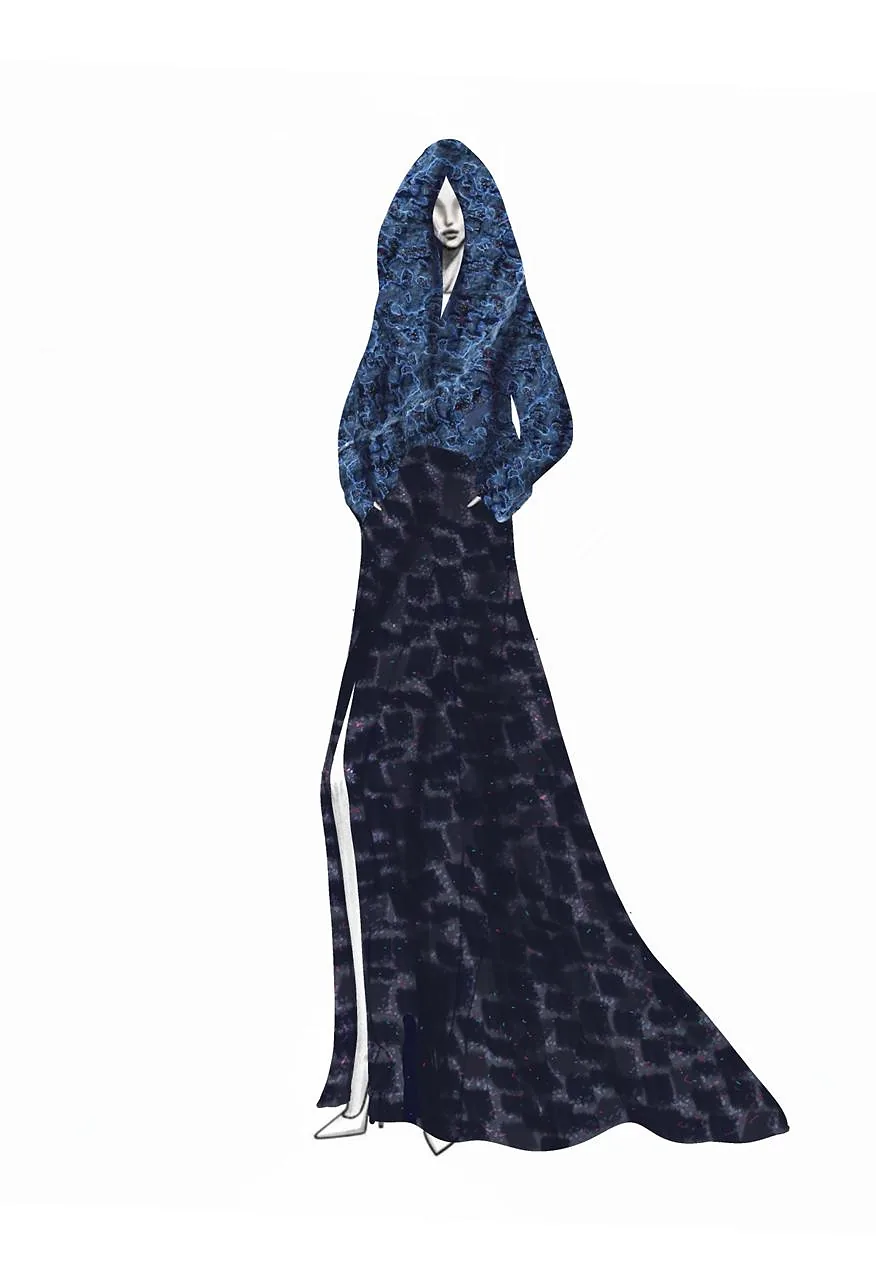
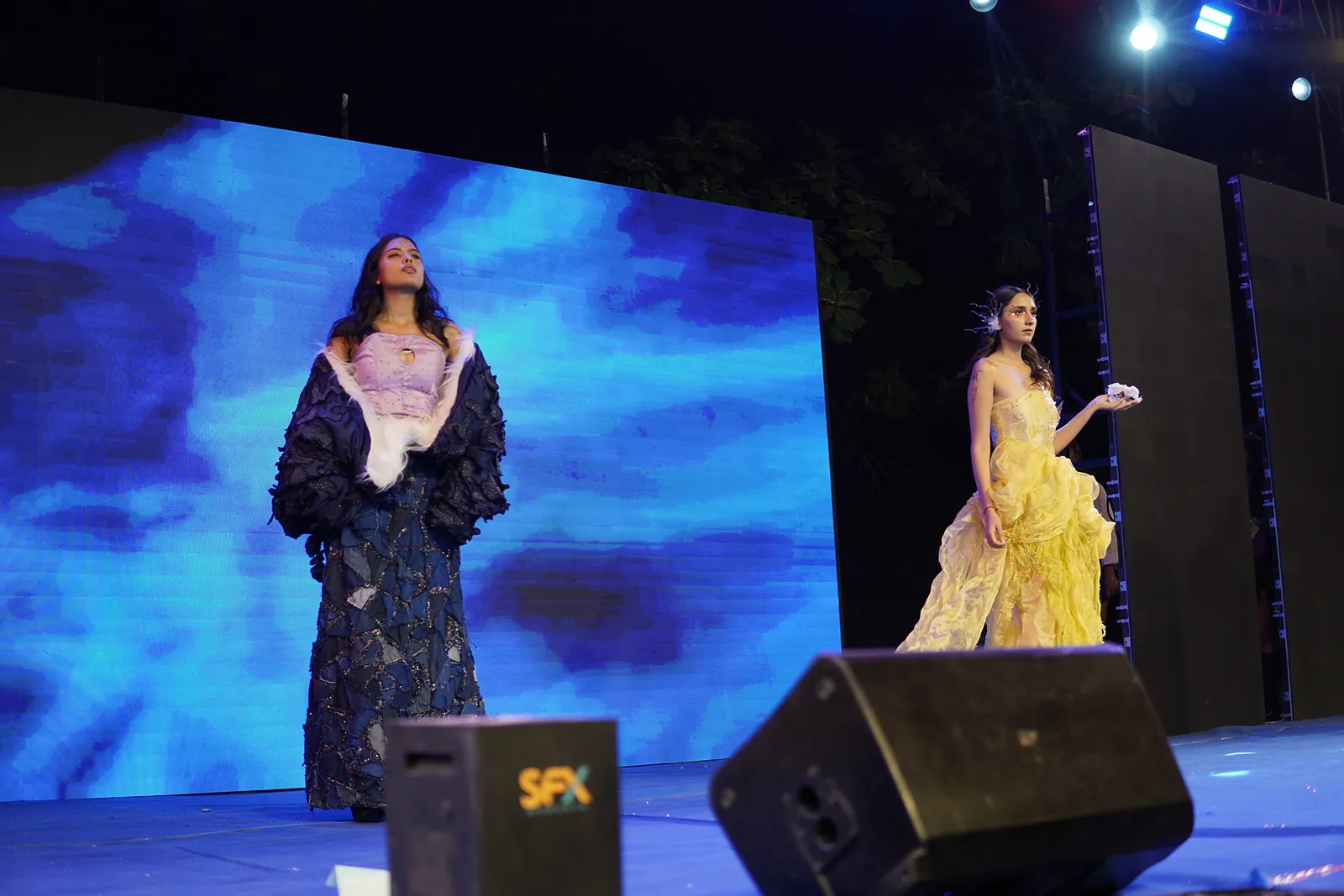
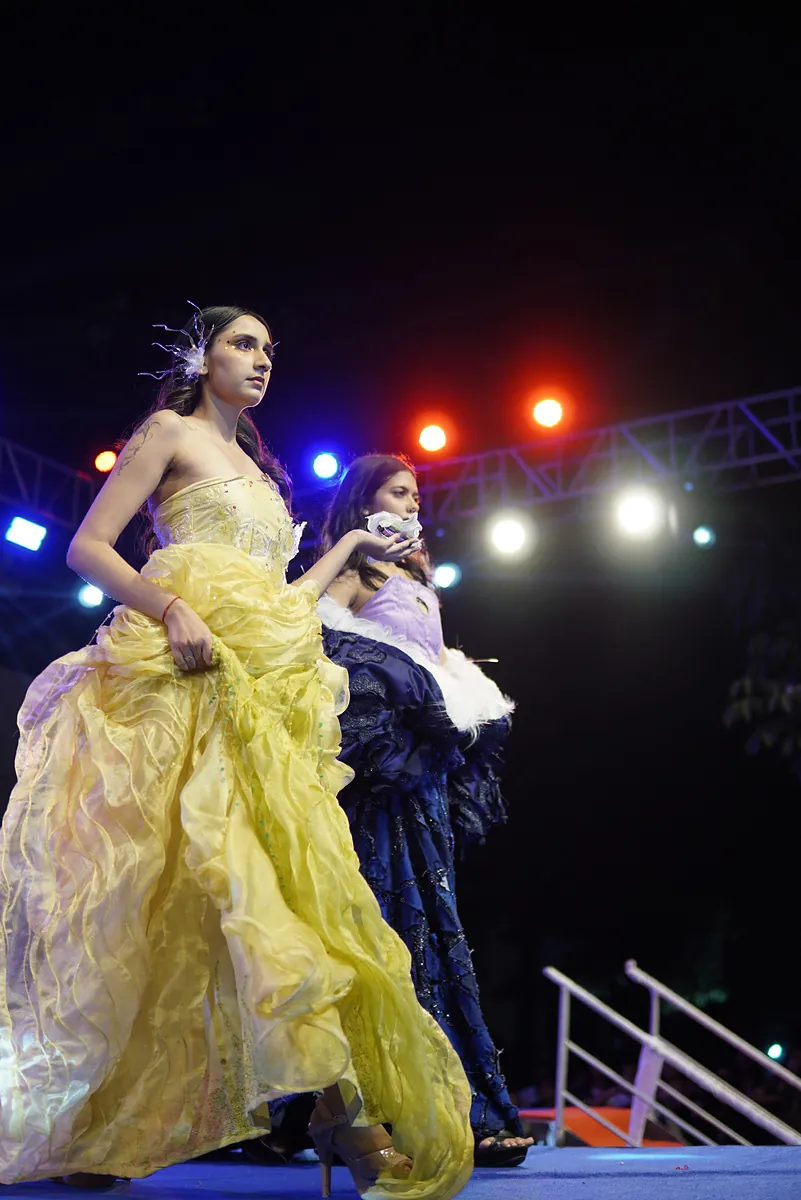
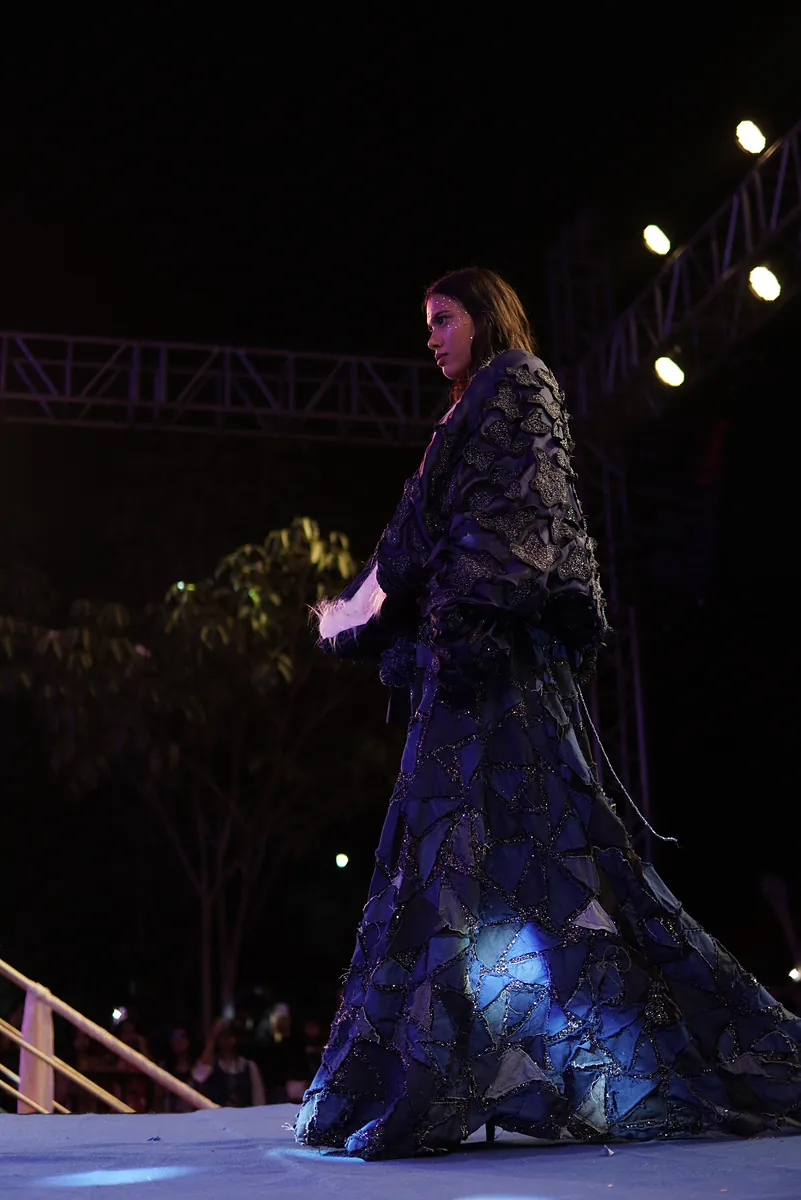
A heavy navy coat of patchwork, glitter seams and white fur: armour built from everything we learn to fear. Underneath, a lilac corset with a light at its heart.
Art to Wear 2026 · 1st runner-up
Two garments and an installation about how we learn to see each other as labels, and how we might unlearn it.
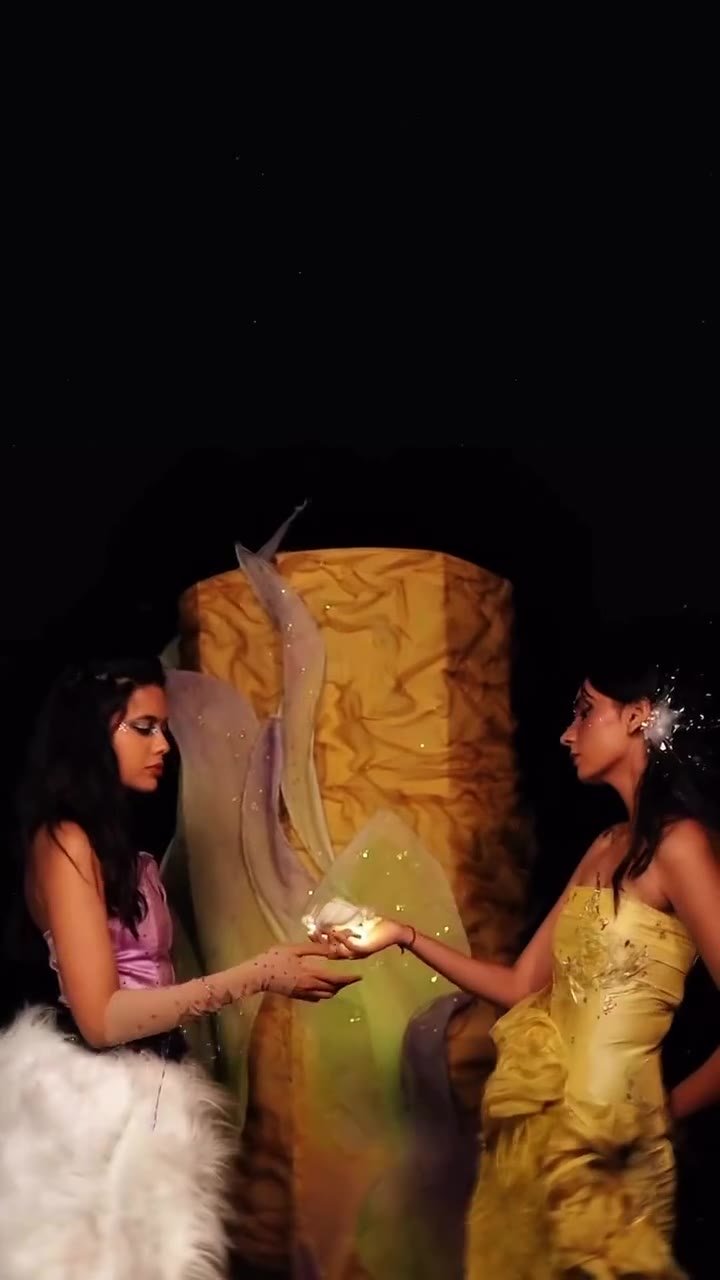
No one is born knowing how to hate. We learn it through fear, labels and divisions. And if something is learned, it can also be unlearned.
01 · The problem
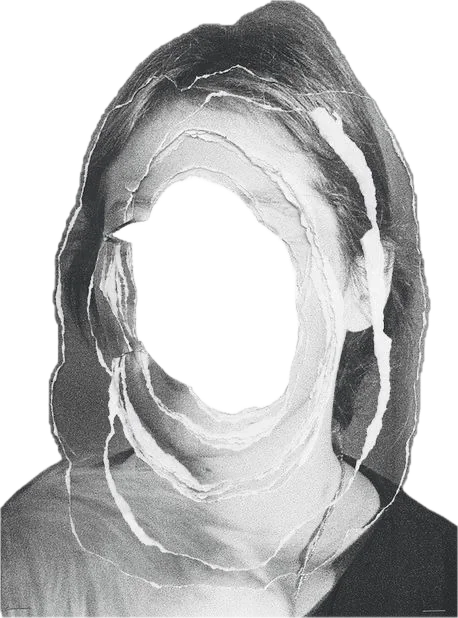
Burnout, comparison and fear of judgment in one person. Polarisation, bias and hate across a society.
02 · The insight
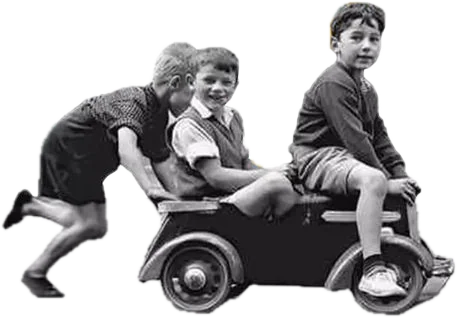
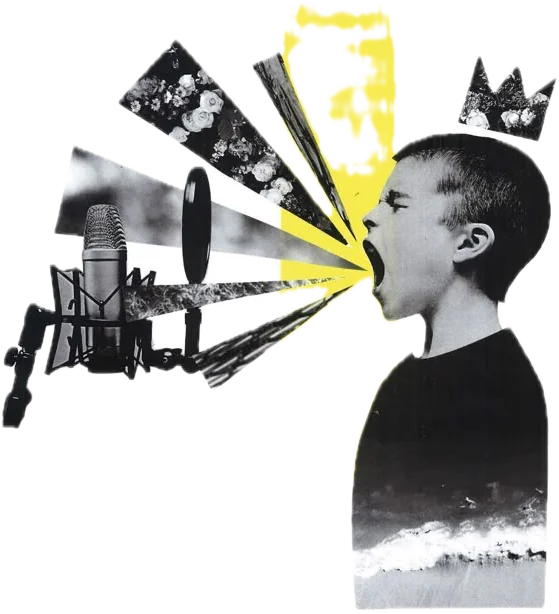
They express freely, trust easily, and put humanity before identity.
03 · The question
We traced it through five stages of research, from early empathy to dehumanisation and back.
Evidence board
Developmental psychology, social learning, moral disengagement, and Zen.
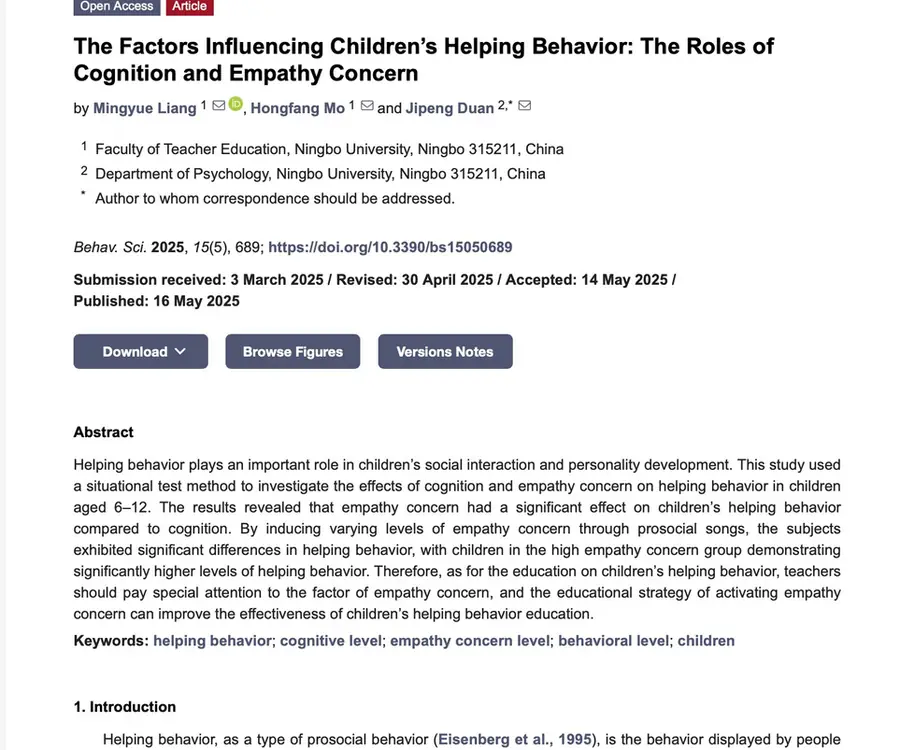
01
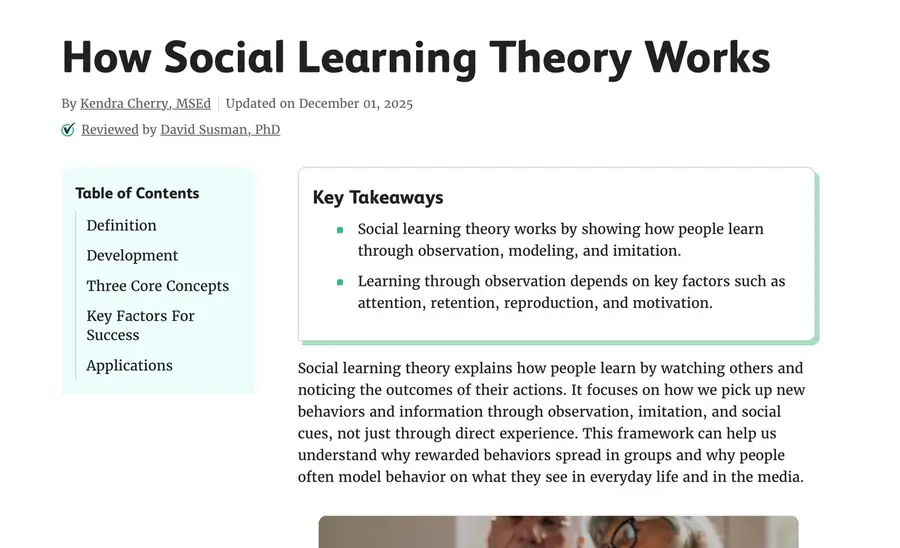
02
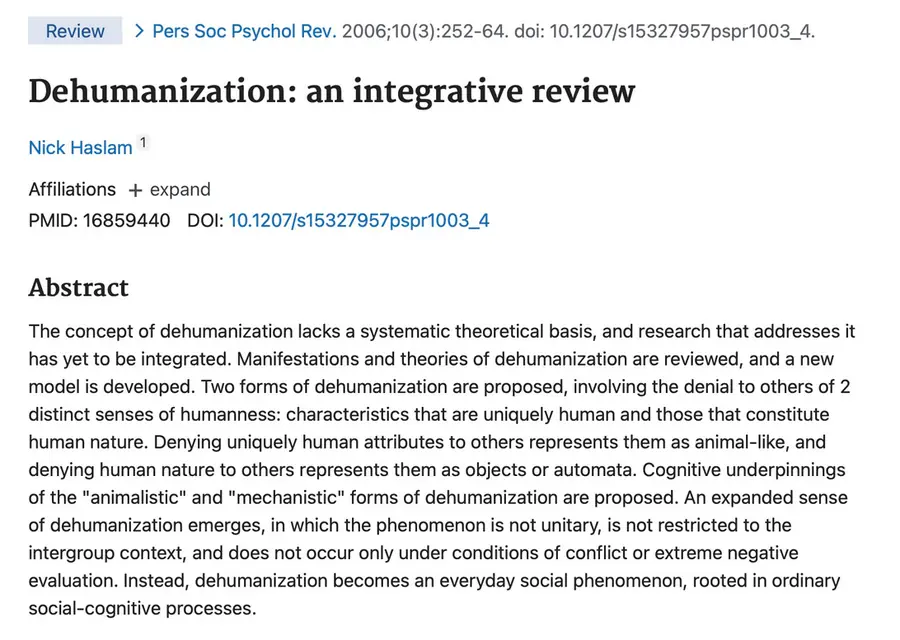
03
04
05
Concept · The Beginner’s Heart
A child’s approach is not naive. It is uncorrupted.
The problem
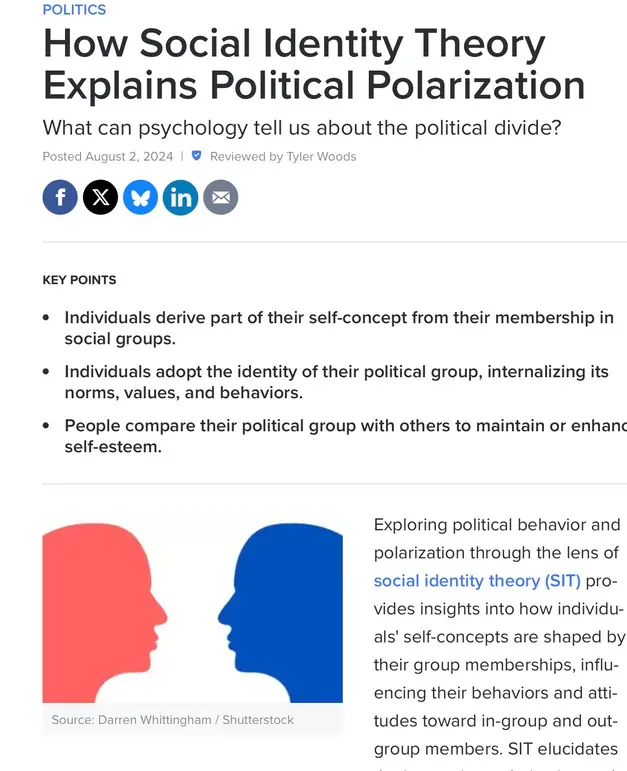
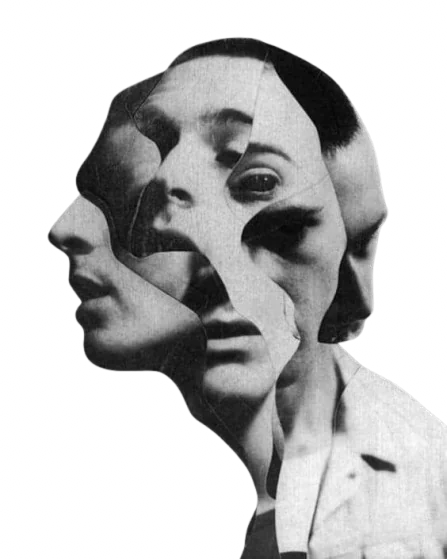
We explored dehumanisation: reducing people to labels, stereotypes or objects. When people are seen as categories, empathy fades and harm becomes easier to justify. It isn’t inherent. It is learned, through fear, hierarchy and conditioning.
The answer
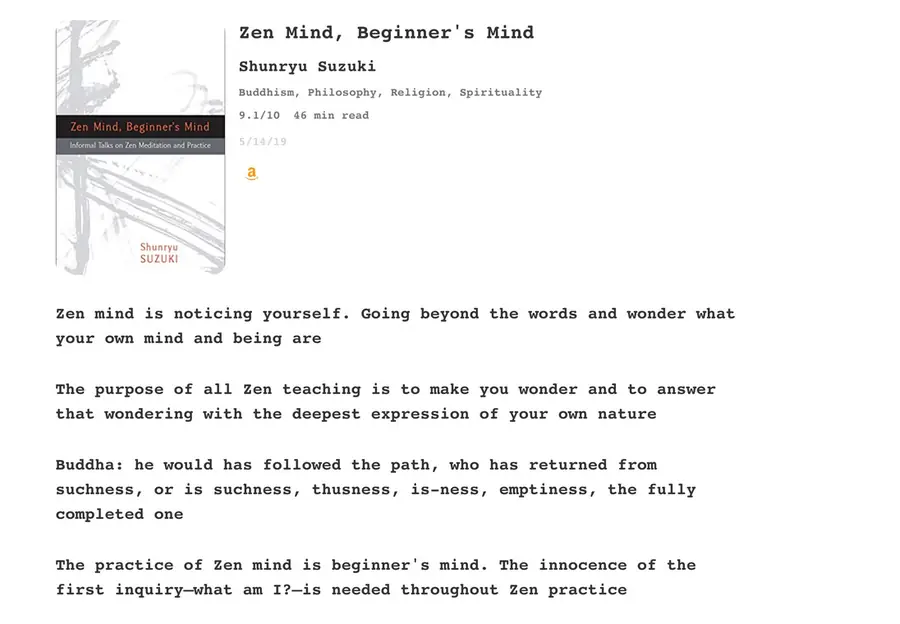
Zen calls it the Beginner’s Heart: meeting the world without preconceived notions, rigid judgments or learned hatred. Not becoming childish, but consciously unlearning conditioned perception.
Final direction
Not to the past, but to an earlier way of seeing.
The garments
One is what we learn. The other is what we were before we learned it.
Look 01 · Conditioned / Problem garment
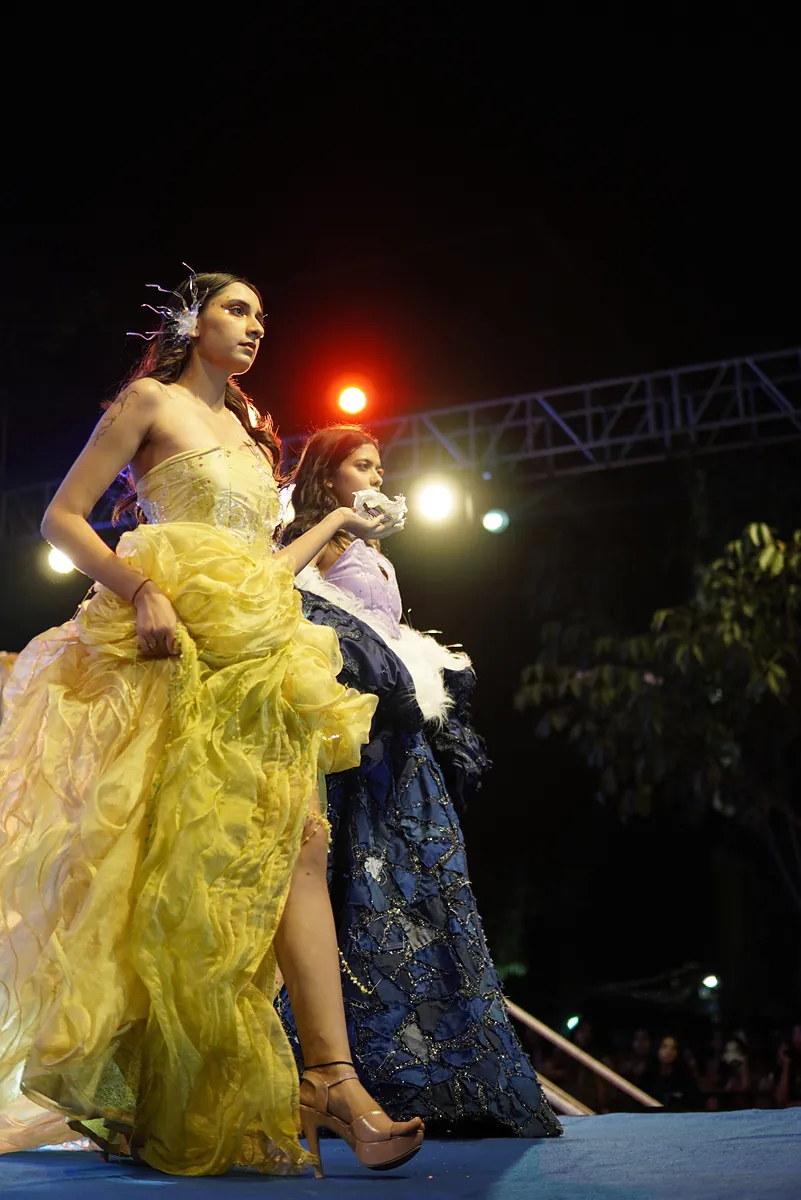
A heavy navy coat of patchwork, glitter seams and white fur: armour built from everything we learn to fear. Underneath, a lilac corset with a light at its heart.
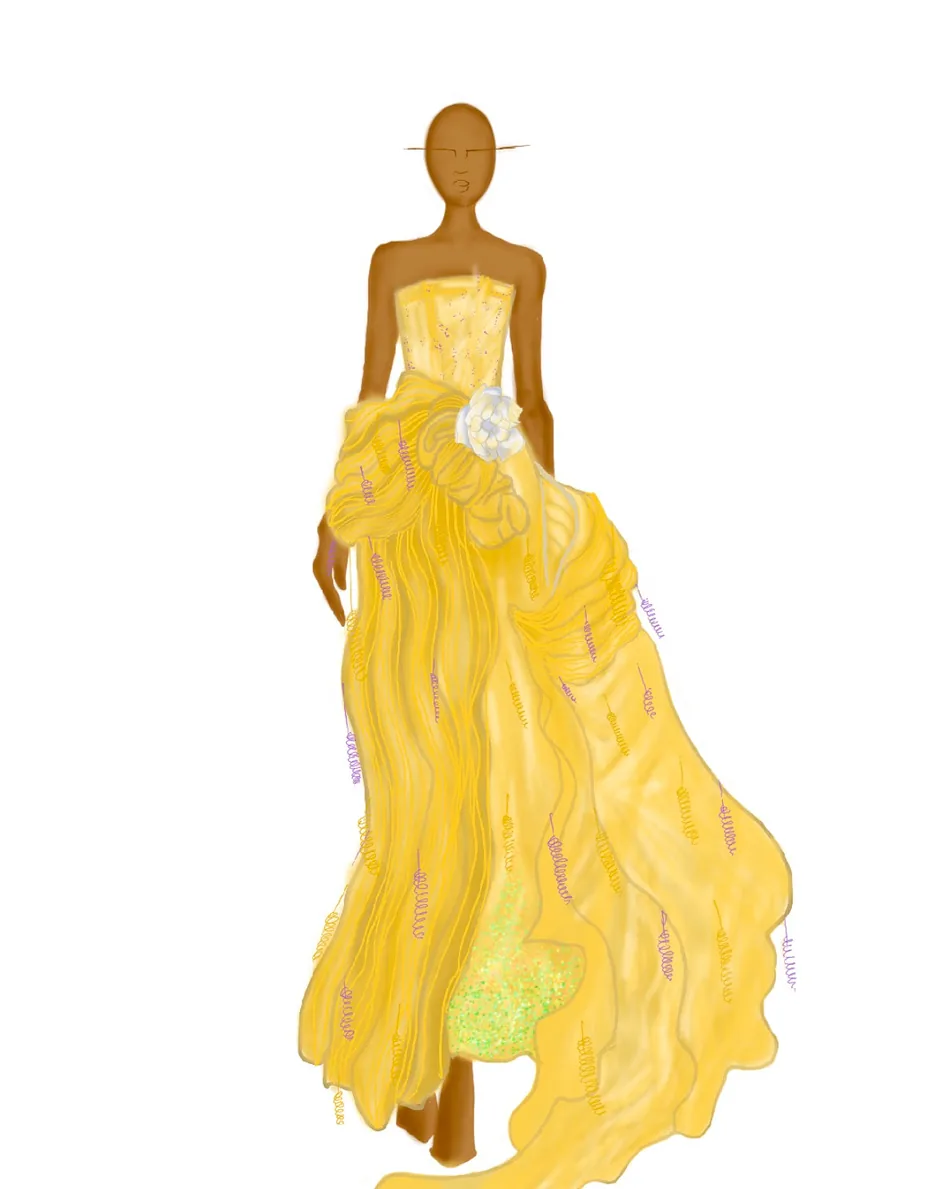
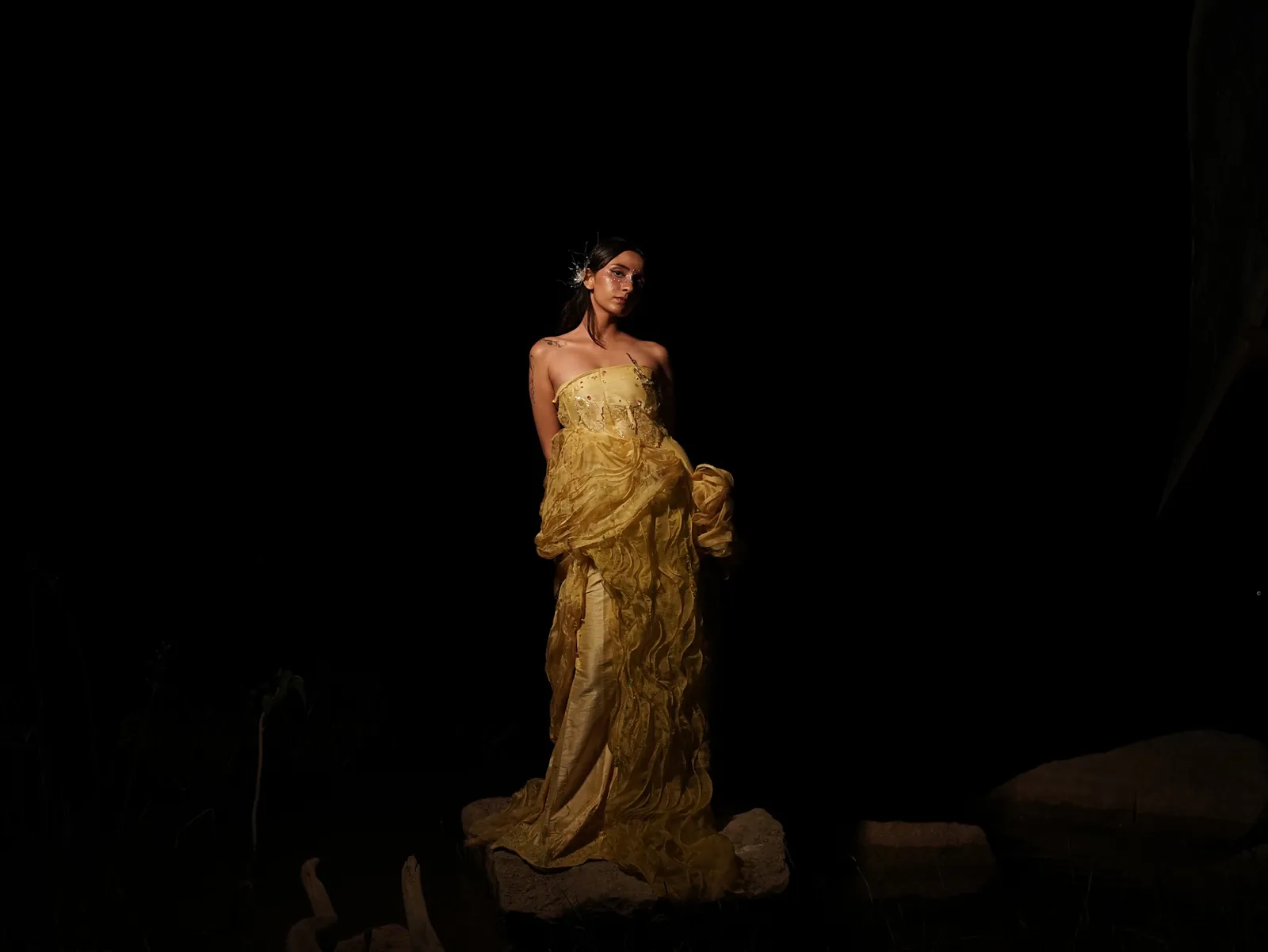
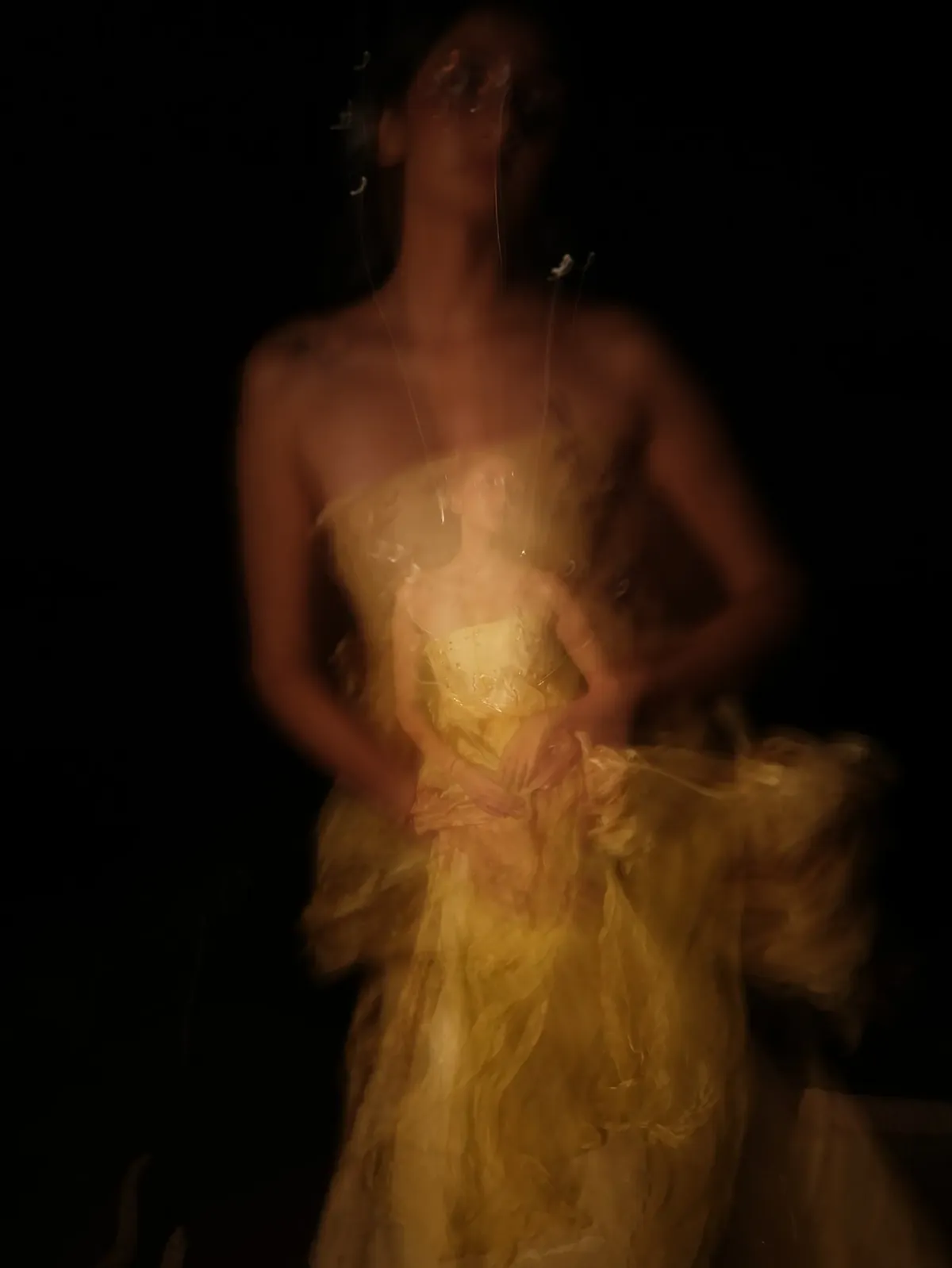
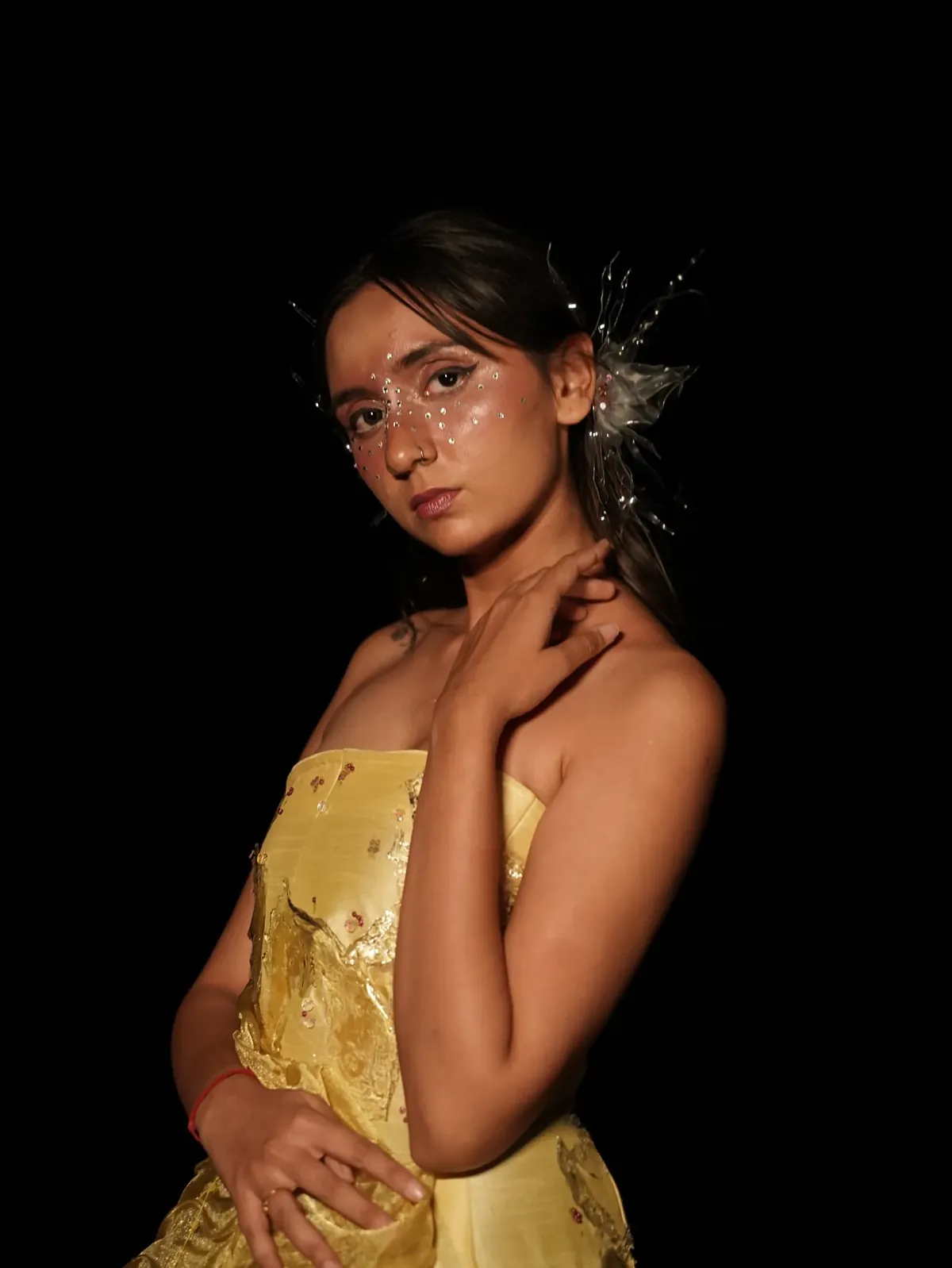
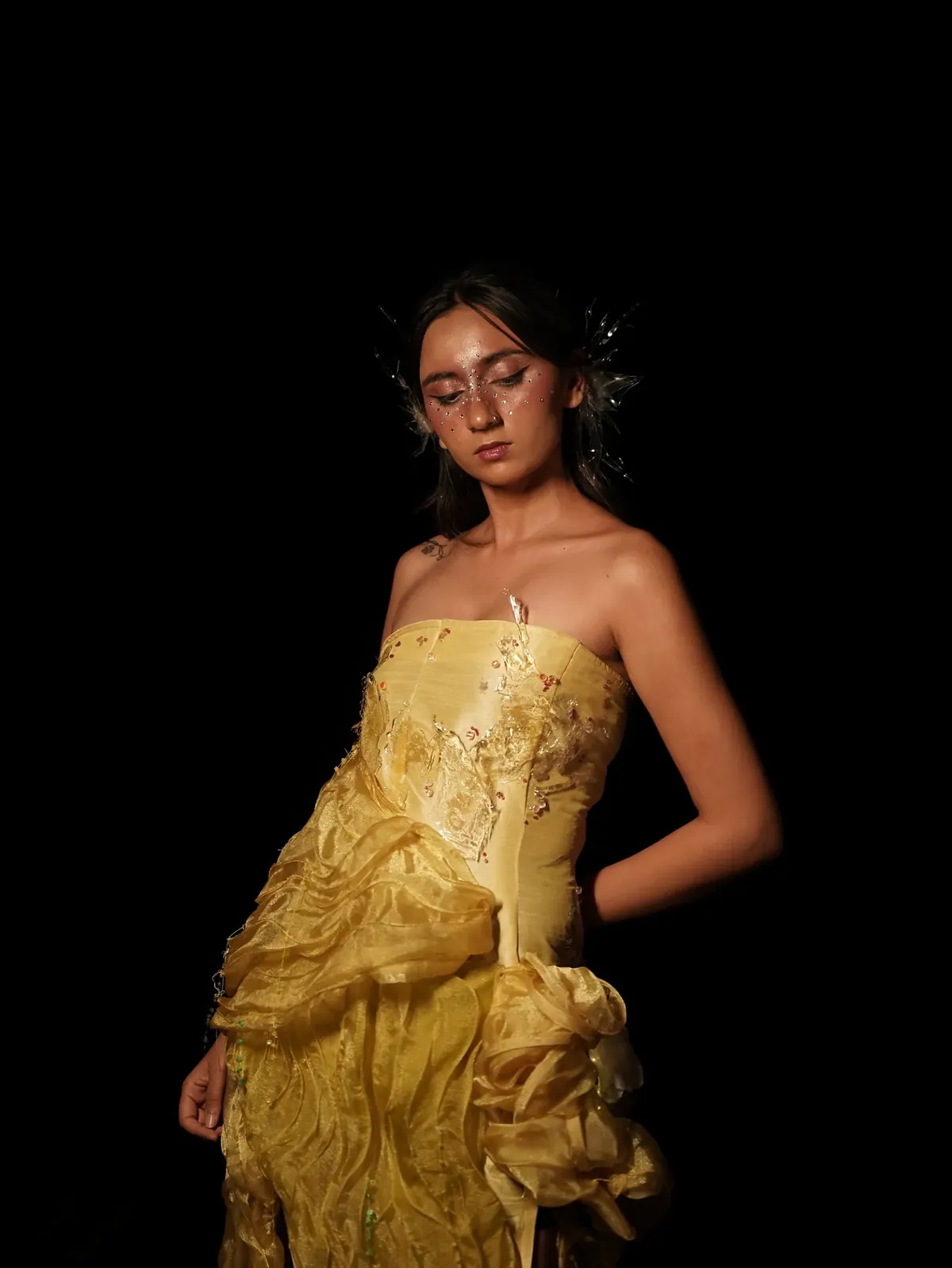
Look 02 · Beginner’s Heart / Solution garment
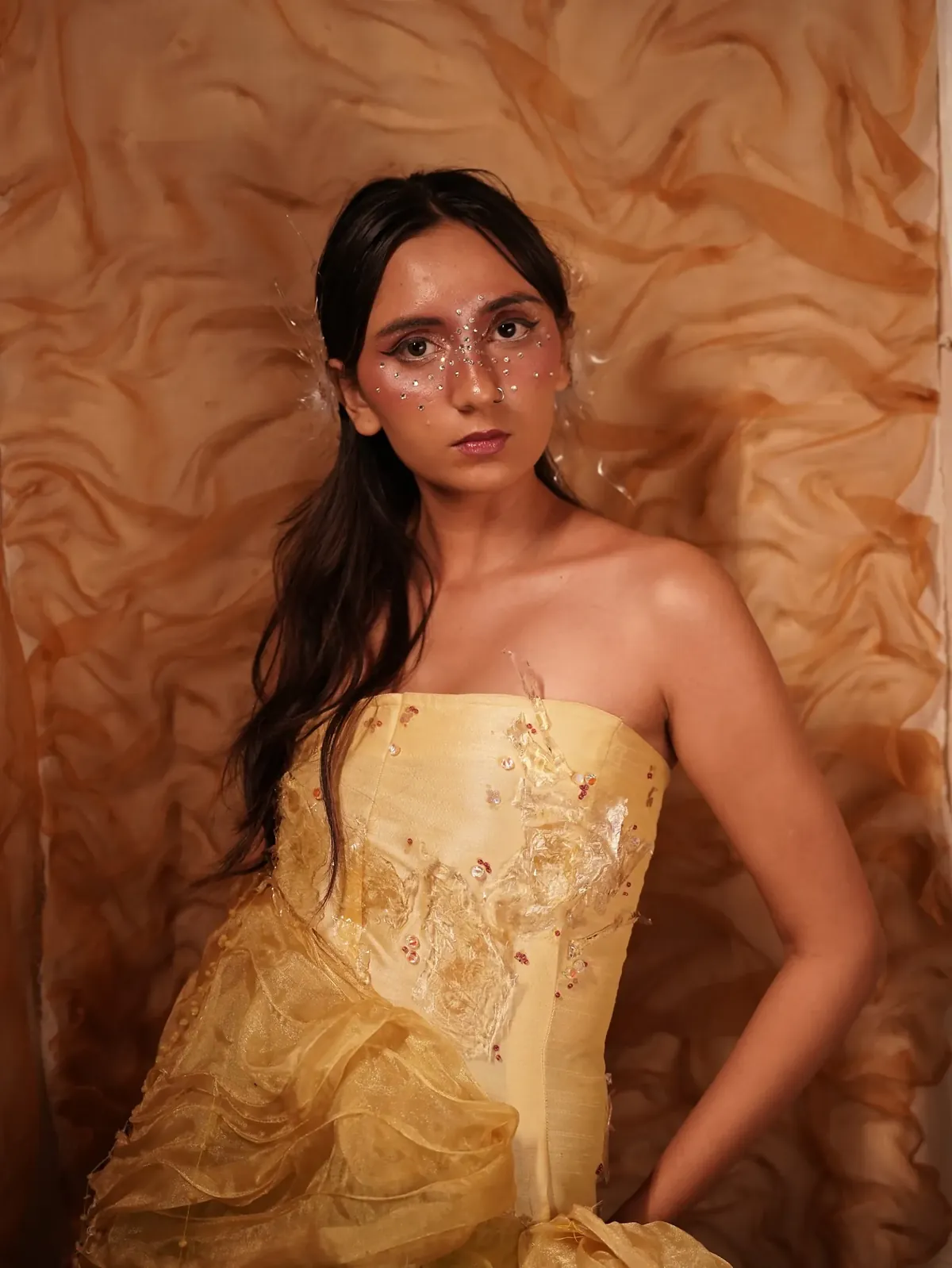
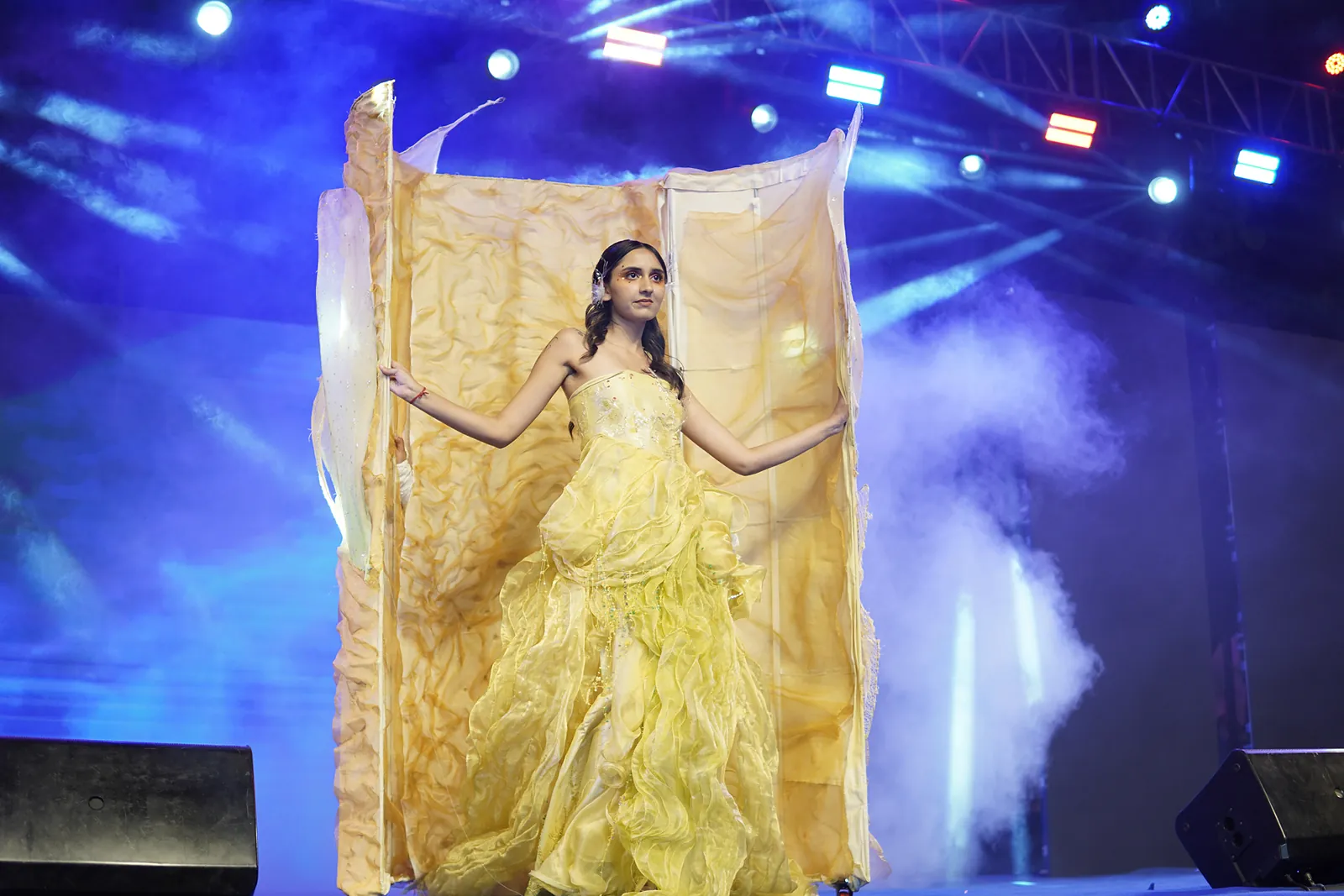
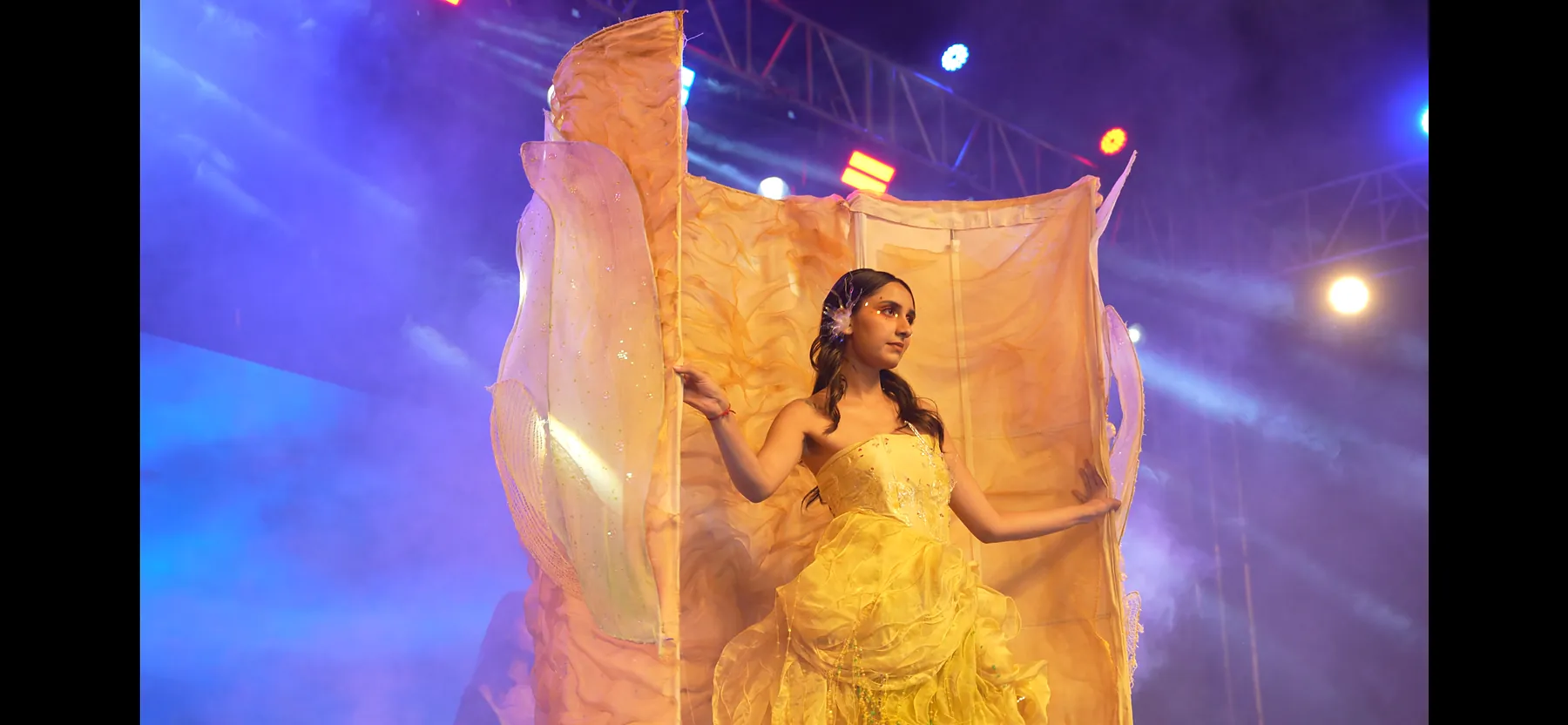
Yellow organza that moves like light, with resin details and a white flower at the waist. Open, soft and unguarded.
Process
Research, materials, the installation and the electronics.
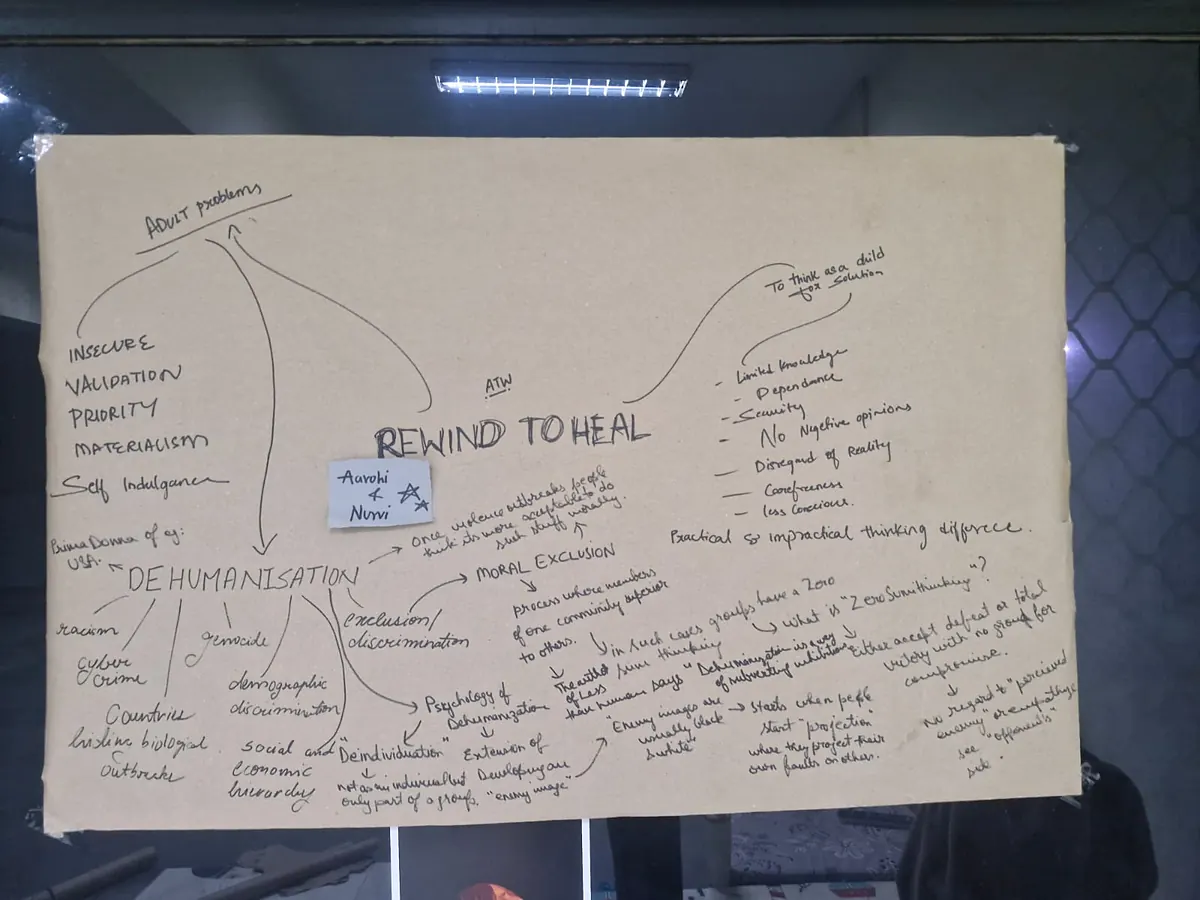
01Rewind to…Mapping where the idea could go.
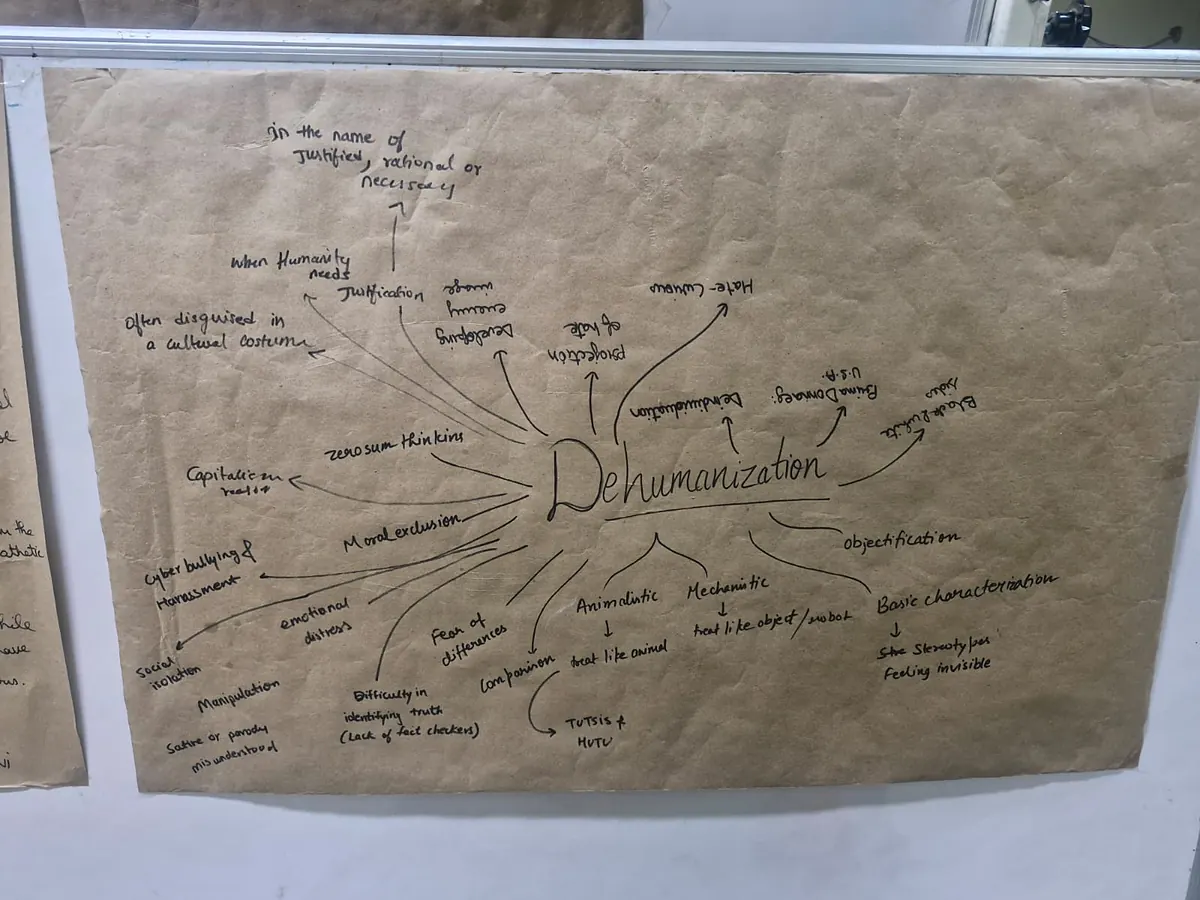
02Adult problemsBurnout, fear, comparison, isolation.
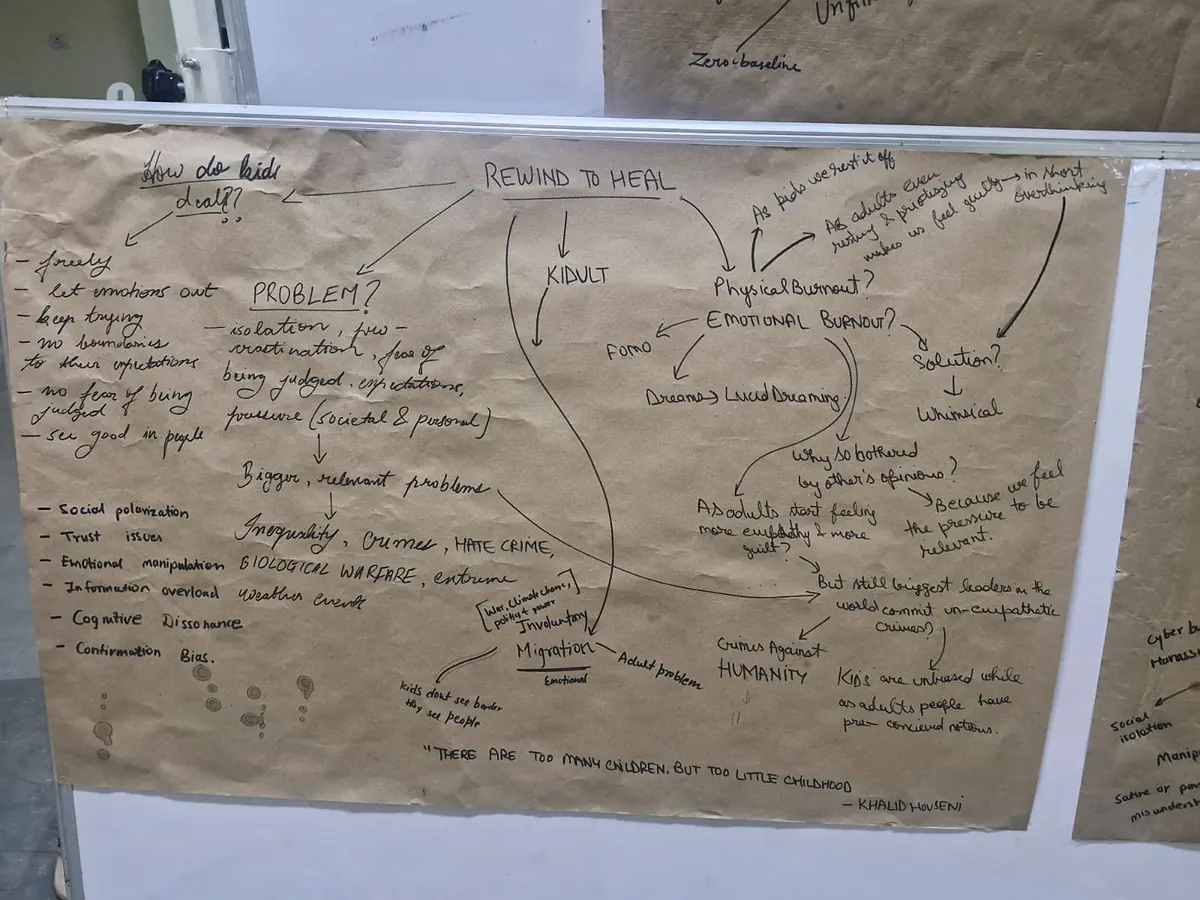
03Into societyFrom one person to polarisation and violence.
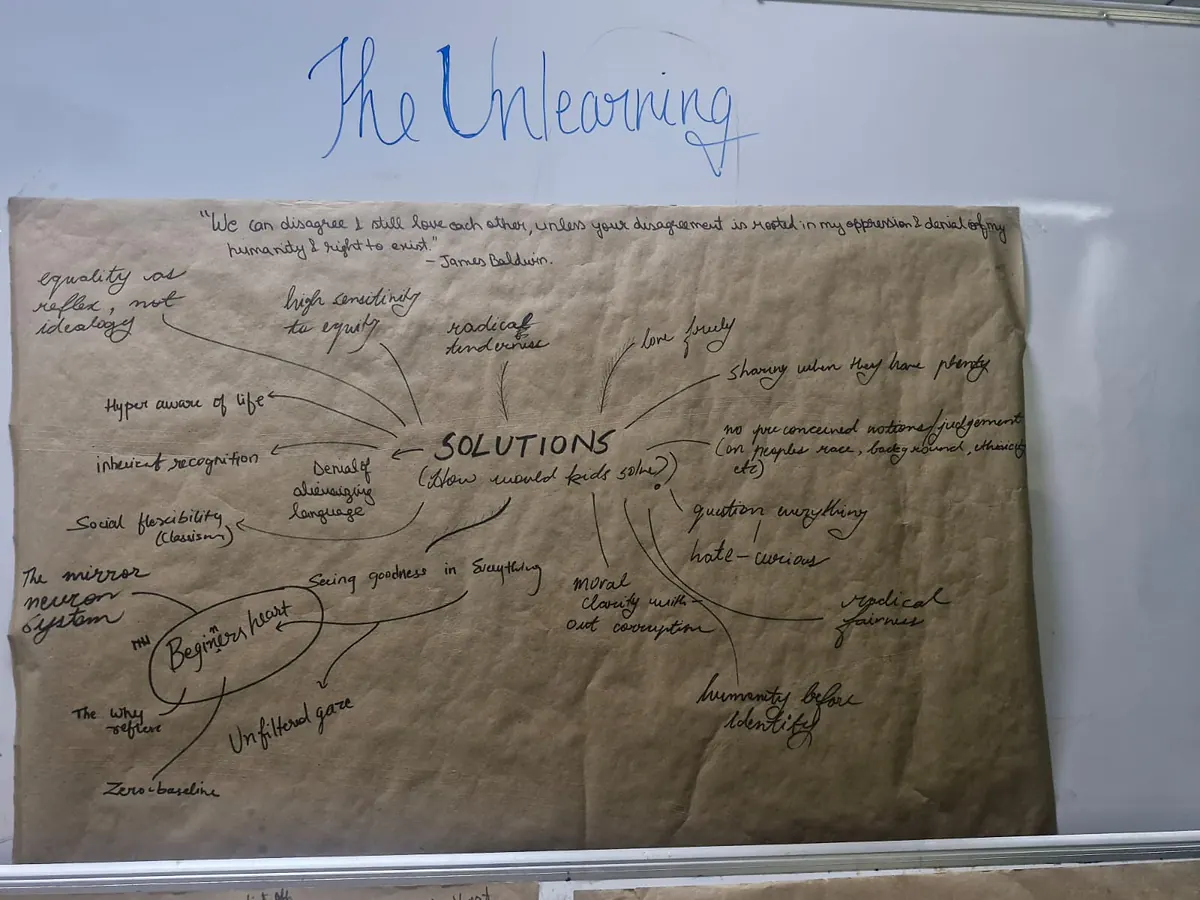
04The UnlearningWhere the solutions began.
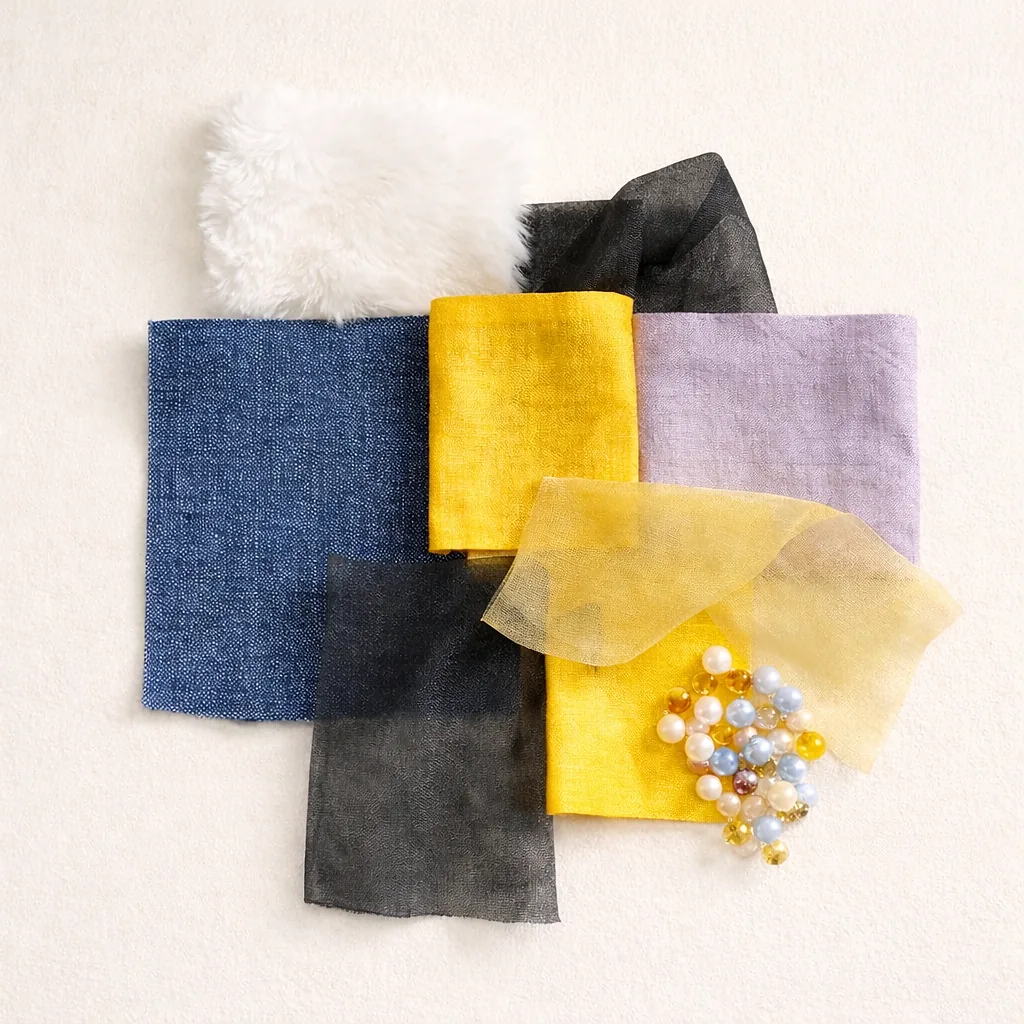
05Material boardNavy, yellow and lilac silks, black net, white fur, pearls.
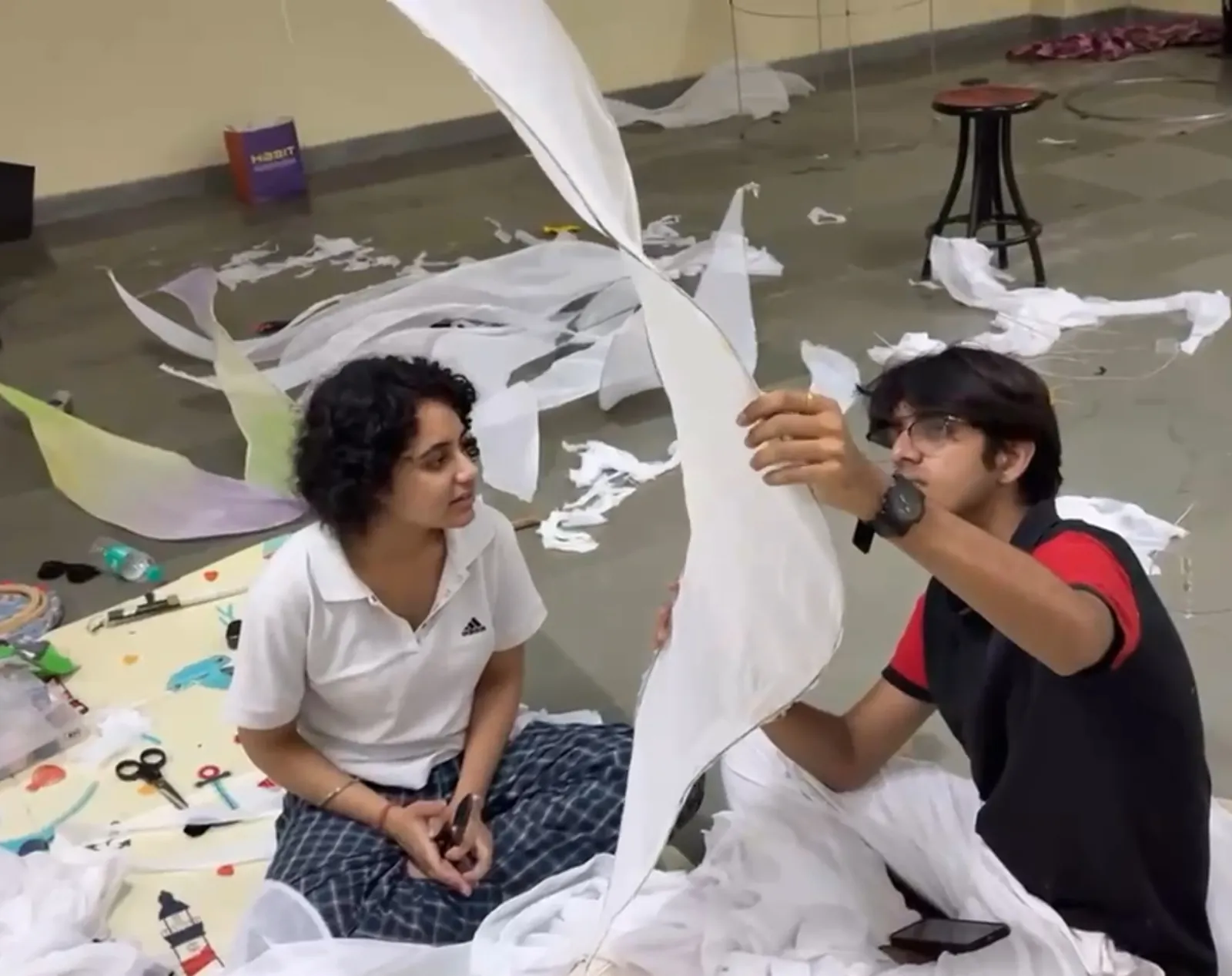
06Organza leavesShaping the leaves that wrap the column.
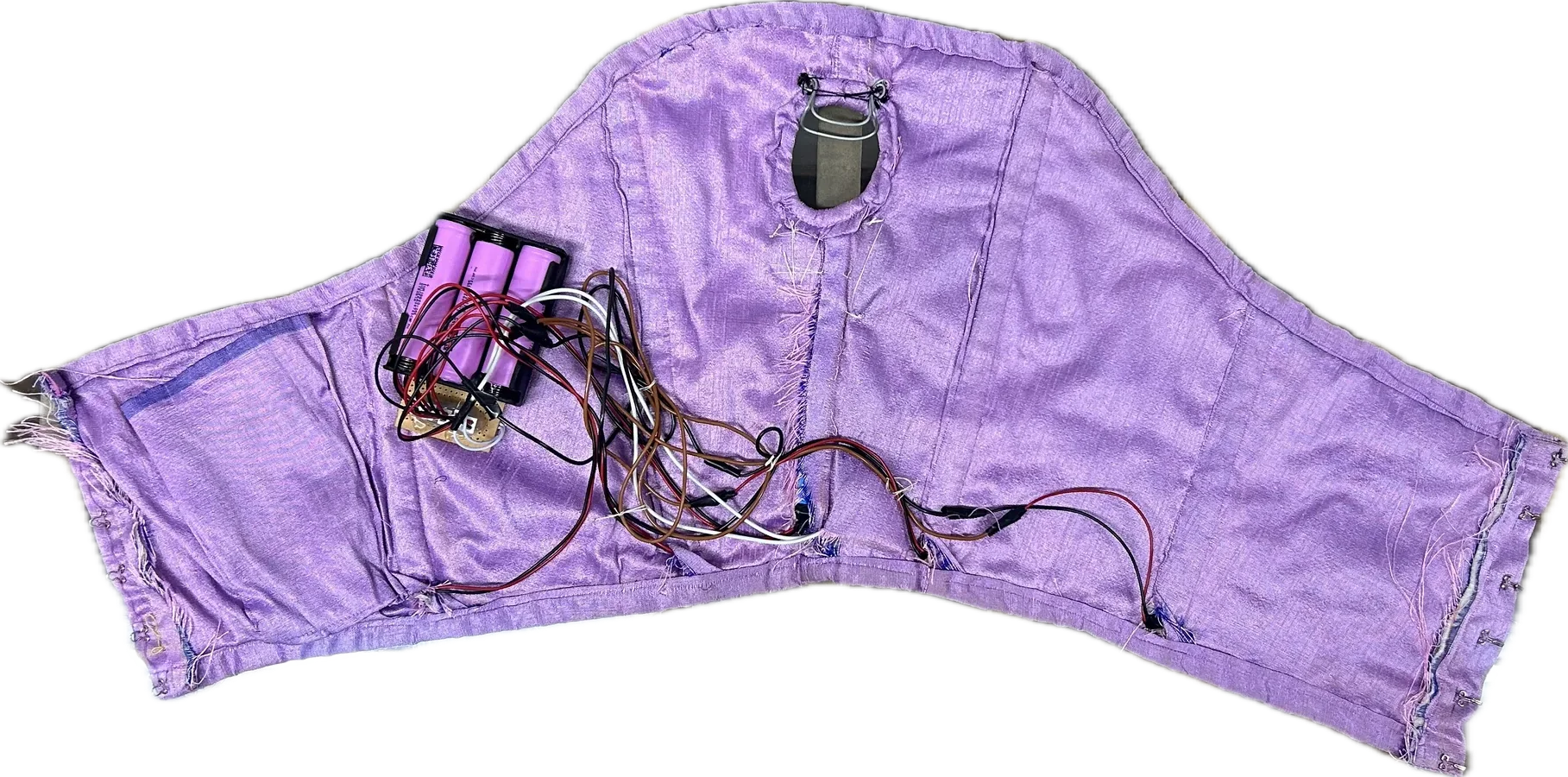
07Inside the corsetLED strips, wiring and cells sewn into the lining.
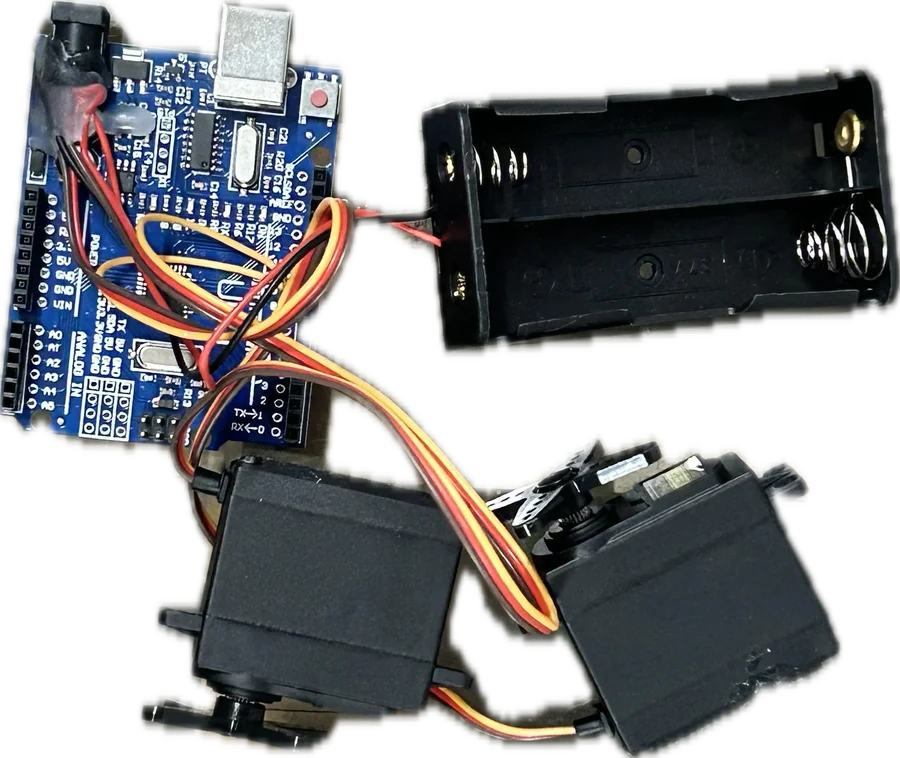
08Arduino and servosThe board and two servos behind the moving parts.
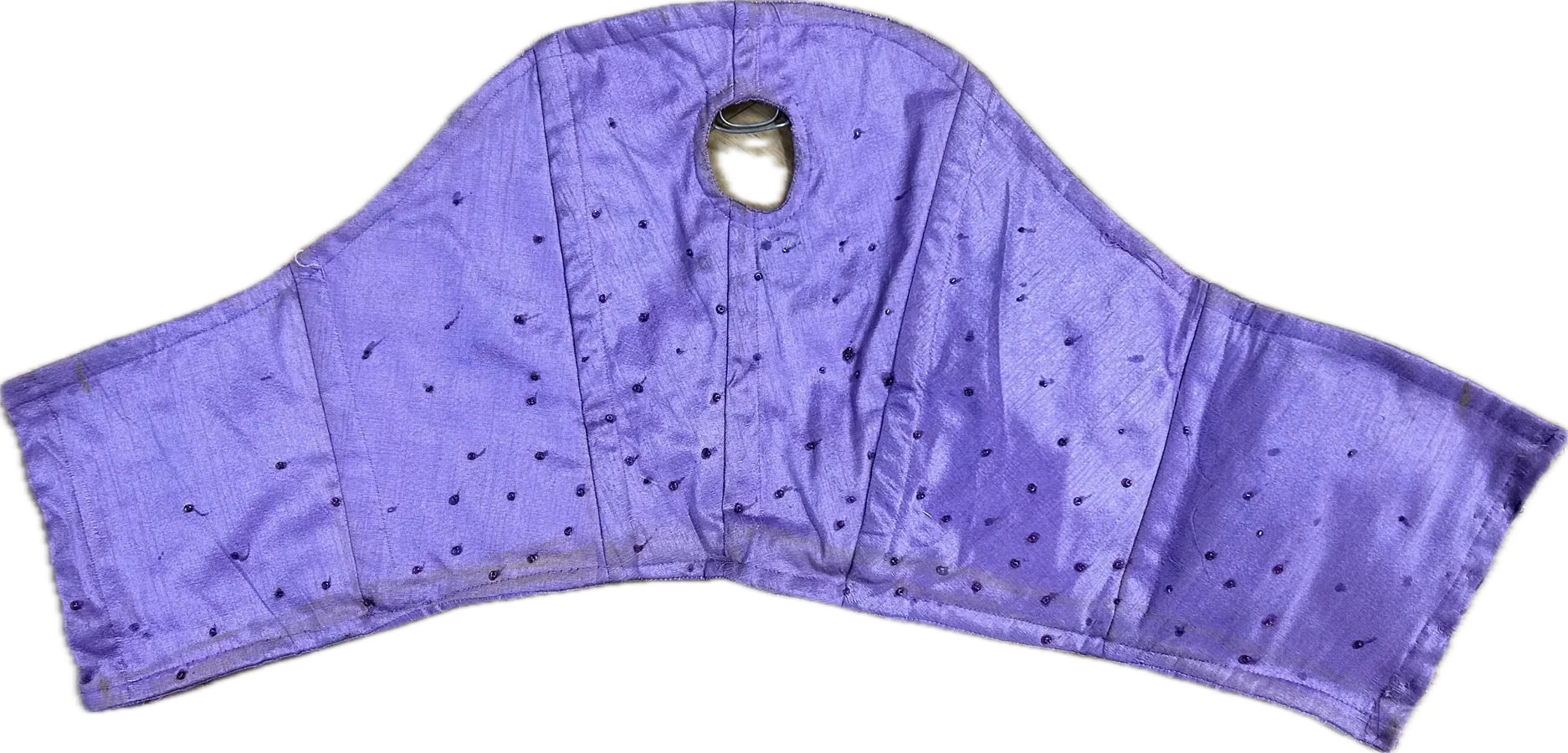
09The corset, closedThe lilac corset worn under the coat.
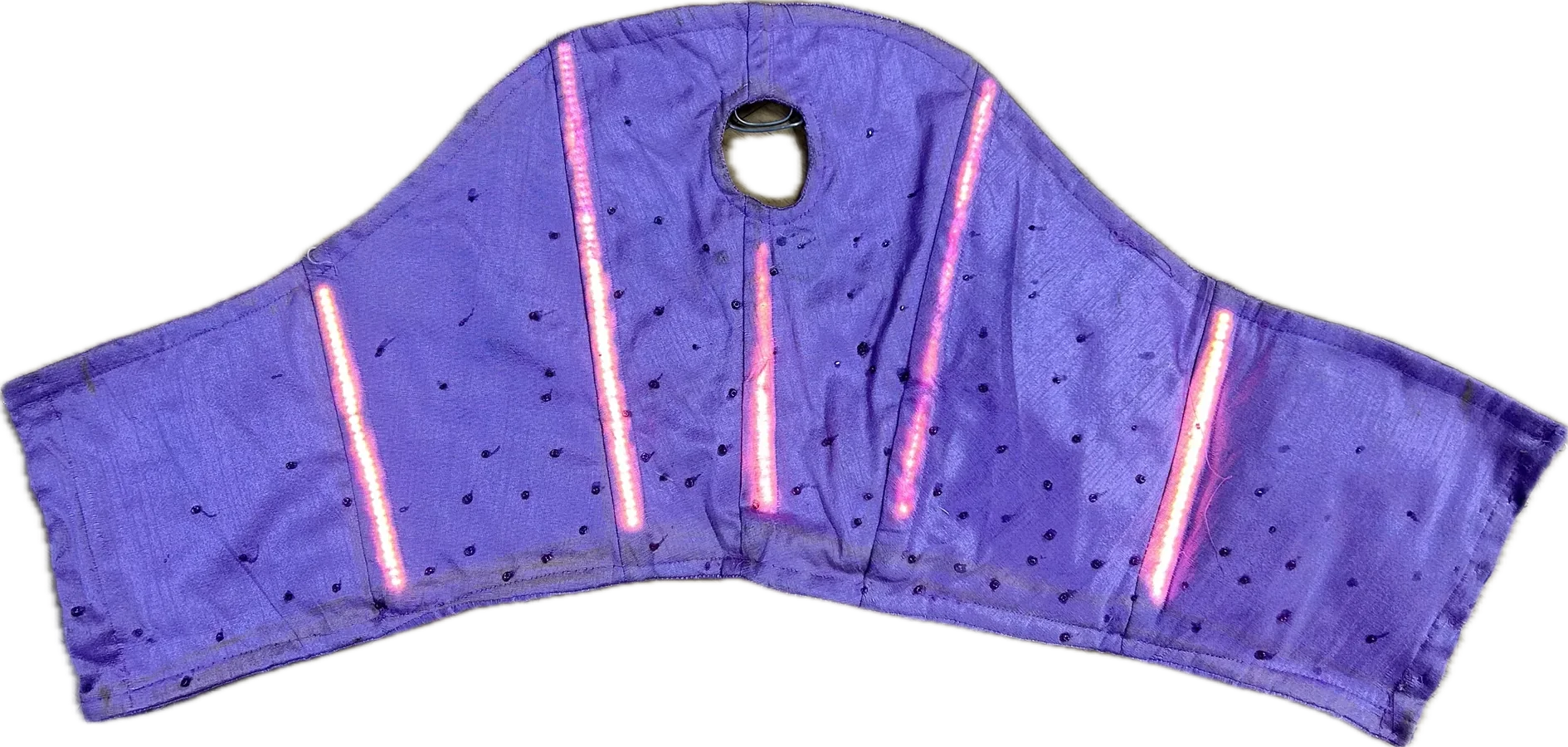
10The corset, litLED strips glowing through the silk.
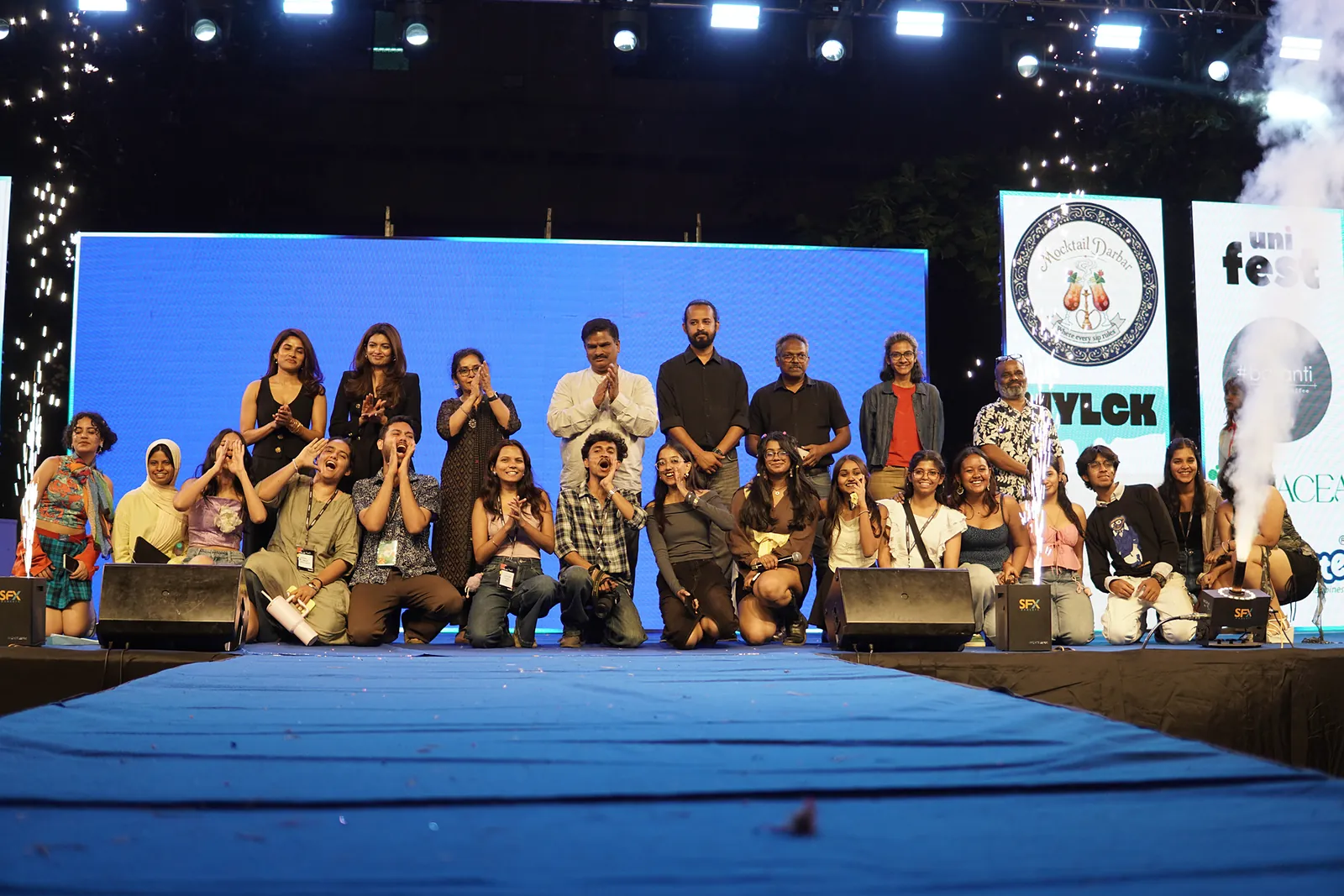
Art to Wear 2026
Both looks and the installation at Art to Wear 2026.
Result · Art to Wear 2026
Two looks, one installation and a team of five.
Shoot
A conceptual night shoot of both looks.
Fashion film · 30 seconds